As portable power solutions evolve, understanding how to use chargers effectively becomes essential. A common question is, “Can a 12V charger be used on two 6V batteries in series?” According to industry expert John W. Simmons, “Using a 12V charger for two 6V batteries can be viable, but caution is key.” This consideration weighs heavily in practical applications.
Batteries in series increase voltage while maintaining the same amp-hour rating. Therefore, charging them with a 12V charger could potentially work. However, it is crucial to ensure that the charger is compatible with the battery type and chemistry. Reports suggest that improper charging can lead to battery damage or reduced lifespan. For instance, a study by the American Battery Institute indicates that overcharging can decrease battery efficiency by up to 40%.
Batteries are sensitive devices, and applying the wrong voltage or current can be detrimental. Users must monitor the charging process closely. Poor practices may leave batteries undercharged or overcharged. Ultimately, while the answer to whether a 12V charger can charge two 6V batteries in series leans towards 'yes,' individual circumstances should dictate the method. Always prioritize safety and reliability in battery management.
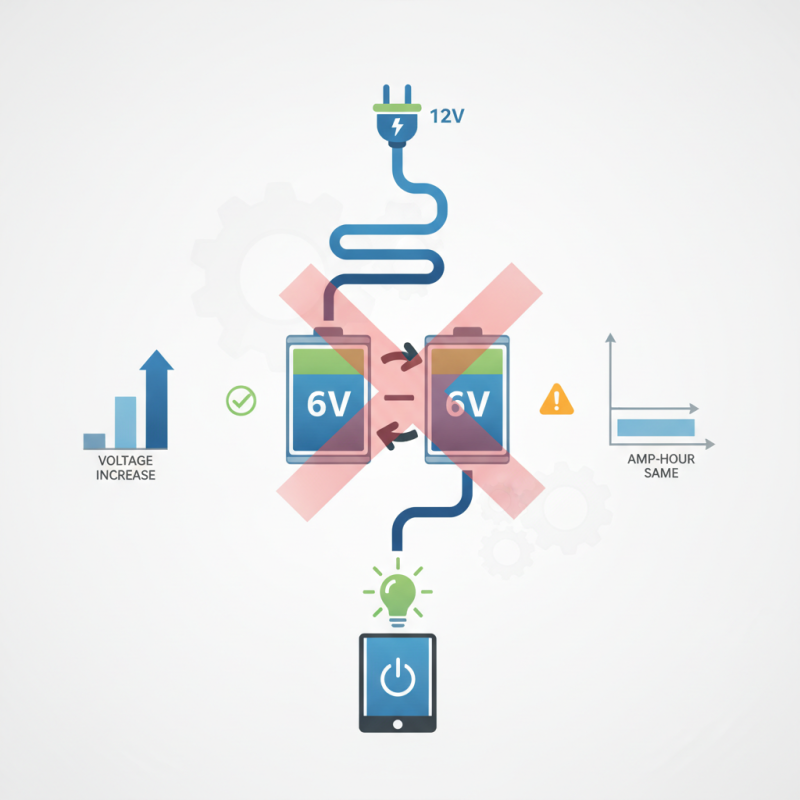
When charging batteries, safety and compatibility are crucial. Using a 12V charger for two 6V batteries in series might seem straightforward. However, it's essential to understand the risks involved. Connecting two 6V batteries in series gives you a combined voltage of 12V. This setup can effectively use a 12V charger. But is it truly safe?
One major concern is the charging profile of the batteries. Not all chargers manage charging voltages properly. If the charger applies too much voltage or current, it could damage the batteries. Overheating is another risk, especially if batteries are mismatched. Even slight differences in age or type can lead to uneven charging. This scenario might result in one battery being overcharged and the other undercharged.
Monitoring is vital when charging in such configurations. Regularly check the batteries’ voltage during charging. Look for signs of swelling, heat, or leakage. If anything seems off, stop the process immediately. Reflecting on these precautions highlights the importance of careful battery management. Charging two 6V batteries in series with a 12V charger can work, but it requires diligence and awareness of potential issues.
When charging batteries, understanding the voltage in a series configuration is crucial. In this case, two 6V batteries are connected in series, resulting in a total voltage of 12V. This setup can be efficient, but there are important considerations to keep in mind.
Each battery must be in good condition. If one battery fails, it affects the entire system. When charging, it is essential to use a charger that matches the total voltage of the series configuration. A 12V charger is suitable for this setup. However, the charger’s output current should be considered. Overcharging can damage the batteries.
**Tip:** Always monitor the charge process. Look for signs of overheating or swelling in the batteries. This indicates potential issues.
Charging two 6V batteries in series can provide effective power for many applications. However, balancing the charge between both batteries is important. Differences in battery health can lead to one battery being overcharged. This not only shortens its lifespan but can also cause safety hazards.
**Tip:** Consider using a smart charger. These chargers can adjust the current and provide better management for series setups. It’s a safer way to ensure both batteries are charged evenly.
| Parameter | Value | Notes |
|---|---|---|
| Total Voltage Required | 12V | Two 6V batteries in series produce 12V |
| Charging Current | 0.5A - 2A | Depending on battery capacity |
| Battery Type | Lead-acid | Common for 6V batteries |
| Charging Time | 6 - 12 hours | Varies by battery capacity |
| Safety Considerations | Moderate | Ensure proper charger compatibility |
| Voltage Drop Allowance | 1V | To account for wiring losses |
| Connection Method | Series | Connecting positive to negative |
When considering charging two 6V batteries in series with a 12V charger, it's crucial to focus on the voltage and current ratings. A charger rated for 12 volts can indeed charge two 6V batteries, but several factors impact the process. Voltage alone determines compatibility; the charger must match the total voltage required by the batteries.
Current ratings play an essential role too. Chargers typically have a limited output current, impacting how fast the batteries charge. For optimal safety, ensure the current rating of the charger is compatible with the batteries' specifications. Charging too quickly may lead to overheating or reduced battery lifespan.
Tips: Always monitor the charging process. Excessive heat indicates a potential issue. If your batteries are not charging fully, the charger may not meet their requirements. Consider a charger specifically designed for series connections to enhance efficiency.
Battery care isn’t limited to charging. Regularly check the connections and battery health. Not all chargers manage voltage drops effectively, which can lead to uneven charging. Awareness of your equipment can prevent damage and ensure longevity.
When charging two 6V batteries in series with a 12V charger, safety is paramount. Connecting batteries in series means that they share the same charging current. This can lead to uneven charging if the batteries are not matched in age or capacity. A slight difference in battery condition can result in one battery overcharging while the other remains undercharged.
It’s crucial to monitor the voltage regularly during the charging process. An overcharged battery can lead to excess heat, which poses a fire hazard. Use a multimeter to check the voltage of each battery while they charge. Also, consider using a charger with a built-in battery management system. This feature can prevent overcharging and prolong battery life.
Another important aspect is to ensure that the batteries are physically secure during charging. Vibration or movement can cause loose connections and sparks. Always place batteries on a non-flammable surface. Additionally, ensure proper ventilation around the charging area. Poor ventilation can trap gases, leading to dangerous accumulation. Engaging in these practices can help minimize risks while charging batteries in series.
Charging two 6V batteries in series with a 12V charger can be effective, but specific techniques must be followed. When batteries are connected in series, their voltages add up, meaning a 12V charger can indeed charge them. However, improper charging can lead to safety concerns and reduced battery lifespan.
One recommended method is to monitor the charging process closely. Regularly check the voltage of each battery. Ideally, each should reach 6.5V, indicating a full charge. An industry report from the Battery Council International shows that proper monitoring can extend battery life by up to 30%. Overcharging one battery could damage it and affect the entire system.
Tips: Always use a charger with an automatic shut-off feature. This helps prevent overcharging. Additionally, consider using a multimeter to regularly check each battery's voltage during charging. This simple tool can save you from potential hazards.
Charging in series adds complexity. Some users ignore equalization, which balances charge across batteries. A lack of equalization can lead to one battery failing prematurely. Regularly balancing your batteries according to expert guidelines can enhance performance and reliability.
: Yes, you can use a 12V charger as two 6V batteries in series equal 12V.
Uneven charging can occur if the batteries are not matched in age or condition.
Regularly check each battery's voltage. Use a multimeter for accurate readings.
It can overheat and may cause safety hazards, affecting the entire system.
Yes, a charger with an automatic shut-off feature helps prevent overcharging risks.
Look for swelling, excessive heat, or leakage from the batteries while charging.
It balances charge across batteries, preventing premature failure of any single battery.
Position them on a non-flammable surface with good ventilation to avoid gas buildup.
Each battery should ideally reach around 6.5V for a full charge.
Yes, neglecting safety measures can impact battery lifespan and overall performance.
Charging two 6V batteries in series with a 12V charger raises important considerations regarding battery voltage and charger compatibility. When connected in series, the combined voltage of the two 6V batteries equals 12V, which aligns with the output of the charger. Therefore, the question "Can a 12V charger be used on two 6V batteries in series" can be answered affirmatively, provided that the charger’s current ratings match the batteries' requirements.
However, safety precautions must be taken into account. It is essential to monitor the charging process to prevent overcharging and ensure that both batteries maintain equal voltage levels to avoid damage. Implementing proper charging techniques, such as using a charger with adjustable settings or checking battery conditions regularly, can enhance safety when charging batteries in series.

E-Tronde Charger