A charger sparking at a terminal can turn an ordinary charging moment into a serious warning. The flash may come from a loose connection, damaged insulation, moisture, dirt, or a worn terminal. It can also signal overheating behind the outlet. Do not push the connector in again. Stop charging immediately and keep your hands away from exposed metal. If the area is safe, switch off power using the appropriate disconnect. Do not pull a damaged plug through smoke or active arcing. Move people away and contact emergency services if flames, heavy smoke, or spreading heat appear. Never use water near energized equipment.
This introduction explains What to do if a charger sparks when hitting the terminal, using practical advice from electrical-safety professionals and equipment manufacturers. Brett Brenner, an electrical-safety educator and former Electrical Safety Foundation International president, has emphasized, “Electrical safety is everyone’s responsibility.” That reminder matters here. A charger may look normal while its cable hides internal damage. Let it cool, then inspect it without bending, scraping, or opening the housing. Photograph the damage if useful. Have the charger, outlet, and terminal examined by a qualified technician before reuse. Replace components that show melting, black marks, cracked plastic, a burnt smell, or repeated sparking. Do not rely on a quick reset. That shortcut feels convenient, but it can conceal a deeper fault. Even experienced users can misjudge a small spark. Caution is not overreaction. It is the safer decision.
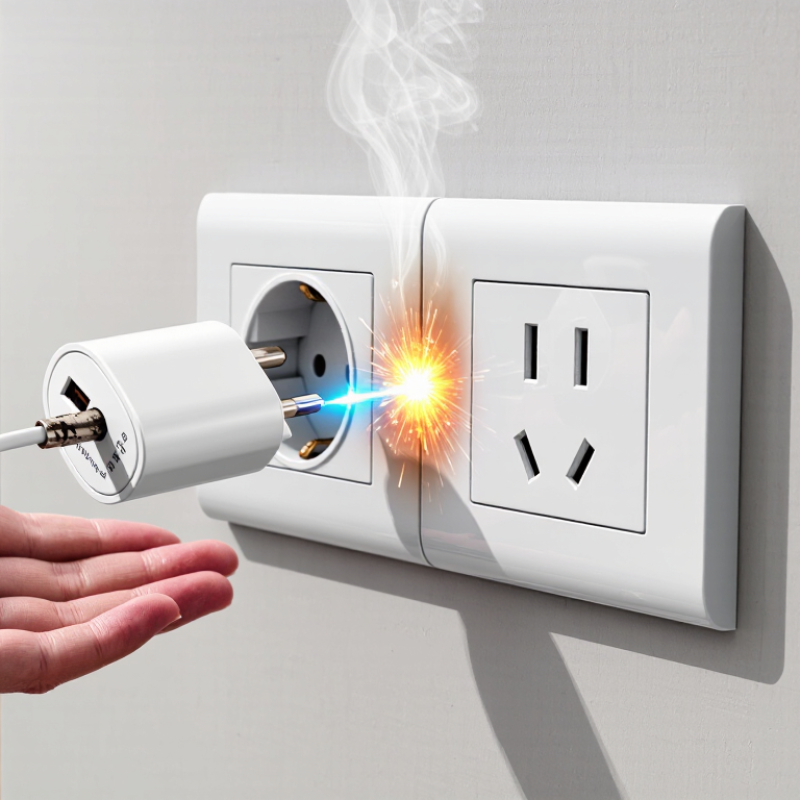
Tips: Keep the area clear and prevent further use. Look for melted plastic, black marks, a sharp burnt smell, heat, swelling, or hissing. Never touch a hot or damaged battery. If smoke, fire, or injury appears, activate the site emergency procedure and contact emergency services. Use the charger’s maintenance instructions and applicable workplace rules. Photographing the damage after the area is safe can help, but evidence should never delay isolation. Even a small spark deserves a careful review.
What to Do If a Charger Sparks at the Terminal in 2026?
A spark at a charging terminal is a stop signal, not a minor warning. Stop the charging process immediately, keep your hands away, and move people clear of the equipment. Do not pull a plug from an arcing connection. If smoke, heat, or a burning odor appears, leave the area and contact emergency services. A quick visual check feels reassuring, but it does not prove the circuit is safe.
OSHA 1910.333 requires de-energization before qualified workers begin electrical work. The process includes disconnecting the circuit, applying lockout or tagout controls, and verifying the absence of voltage with suitable test equipment. Treat the charger as energized until that verification occurs. Never rely on a screen, indicator light, or silence. Only trained and authorized personnel should access the disconnecting means or inspect damaged terminals.
The risk deserves attention. NFPA research estimates that electrical distribution and lighting equipment contributed to about 32,000 U.S. home structure fires annually from 2015 through 2019. Those fires caused approximately 470 civilian deaths and 1,100 injuries. The figures do not describe every charging incident, but they show why small electrical faults demand discipline. My instinct might be to reset the equipment quickly. That is exactly the mistake worth challenging. Record the time, visible damage, odor, and operating conditions, then arrange qualified inspection before re-energization.
Stop charging, keep clear of exposed energized parts, and follow the OSHA 1910.333 approach to de-energization: disconnect the circuit, lockout or tagout where required, release stored energy, and verify the absence of voltage with test equipment before work begins.
The chart shows OSHA 1910.333 Table S-5 minimum approach distances for exposed energized parts. For 300 volts or less, OSHA specifies “avoid contact”; the zero value is used only to display that instruction. These distances do not replace de-energization and verification.
Source: OSHA 29 CFR 1910.333(c)(3), Table S-5.
A visible spark at a charging terminal is a warning, not a normal charging step. Stop charging and disconnect the power source only if it is safe. Do not twist, scrape, or repeatedly reconnect the plug. Inspect the terminal for black marks, melted plastic, looseness, corrosion, or metal debris. Check the cable for crushed insulation, exposed conductors, bent contacts, or a hot connector. IEC 62133 safety criteria emphasize controlled charging, insulation integrity, protection against short circuits, and safe battery construction. The standard does not make every charger automatically safe. A qualified technician should assess uncertain damage.
Tips: Use a dry, well-lit area for inspection. Keep the battery away from heat and flammable materials. Do not charge a swollen, leaking, cracked, or unusually hot battery. If you notice smoke, hissing, or a strong chemical smell, move away and contact local emergency services. Never test a damaged terminal with bare metal tools.
Also inspect the battery housing and contact alignment. A loose cell connection, damaged seal, or distorted casing can create abnormal resistance and heat. A quick visual check may miss internal damage; that limitation matters. Record what happened, including charging time, odor, sound, and temperature. Do not rely on memory alone. If the spark occurred after moisture exposure or a recent drop, stop using the complete charging system until it receives professional evaluation. Safety decisions should favor replacement or repair over another trial.
Switch off the supply before touching the connector. Do not twist, pull, or reconnect a warm plug. Look for darkened metal, melted insulation, loose screws, moisture, or a burnt smell. NFPA reports that electrical distribution and equipment caused about 32,000 U.S. home fires annually from 2016 to 2020, with roughly 470 deaths and 1,100 injuries. A charger spark is not automatically catastrophic, but it deserves disciplined testing.
Use a properly rated digital multimeter, with intact leads and shrouded probes. Its measurement category and voltage rating must match the installation. IEC 61010-1 addresses safety requirements for electrical measurement equipment, including protection against shock, energy hazards, and foreseeable misuse.
CAT markings are not decoration. CAT III equipment suits many building-distribution measurements, while CAT IV applies nearer service entrances. Check the meter and leads together. Many people check only the meter.
Test the charger output voltage against its stated polarity and expected range. Confirm zero energy before resistance or continuity testing. Never use continuity mode on an energized terminal. For grounding, measure the protective conductor only under an approved procedure, not by improvising with a probe.
A low reading can still hide a loose connection or intermittent fault. I have seen “normal” voltage readings change when a cable moves slightly. That detail matters.
If the spark repeats, stop testing and obtain assessment from a qualified electrical professional.
Sources: IEC 61010-1; National Fire Protection Association, Electrical Fires, 2023.
A spark at a charger terminal demands distance, not curiosity. Stop the session and keep hands away from the connector. If an emergency stop is clearly accessible, use it without reaching through smoke, heat, or exposed metal. Do not reconnect the charger to “test it again.” That common reaction can worsen damaged contacts.
Record the exact time, terminal number, vehicle or equipment type, weather, warning message, smell, sound, and visible discoloration. Take photographs only from a safe position. Preserve the connector’s condition. Do not clean, bend, or file the contact surfaces before inspection. A rushed reset is poor evidence. I have seen small burn marks become difficult to interpret after repeated handling.
Escalate repeated sparks to a qualified electrical technician or the site’s competent maintenance team. Request isolation, inspection, and a written fault report covering contact wear, loose conductors, moisture, insulation damage, and protective-device operation. The National Fire Protection Association reported an annual average of 46,700 U.S. structure fires involving electrical failure or malfunction from 2017 to 2021. Those fires caused about 390 civilian deaths and 1,330 injuries. The figures are broader than charging equipment, but they show why “only a small spark” is not a reliable diagnosis. Record the repair decision, even when the final cause remains uncertain.
Stop charging immediately. Move people away from the equipment. Keep your hands, face, and clothing clear. Do not pull the connector through an arc. If safe, use the normal disconnect. Treat the charger as energized until qualified personnel verify otherwise.
A spark may indicate loose contact, damaged insulation, moisture, contamination, or overload. Arc flash can release intense heat, pressure, molten metal, and smoke. A small mark is not a complete diagnosis.
No. Repeated resets may worsen damaged contacts or hide an internal fault. I might want a quick confirmation, but that instinct is unsafe. Leave the equipment isolated for inspection.
Look for melted plastic, black marks, swelling, heat, hissing, or a sharp burnt smell. Never touch a hot or swollen battery. A visual check cannot prove the circuit is safe.
A trained and authorized electrical technician should inspect it. They should check cables, terminals, insulation, ventilation, battery damage, and protective devices. Unqualified workers should not open equipment or access disconnects.
Authorized personnel should disconnect the circuit and apply lockout or tagout controls. They must verify zero voltage with suitable test equipment. Do not rely on a display, indicator light, or silence.
Record the time, terminal location, equipment type, warning message, odor, sound, weather, and visible damage. Take photographs only after isolation. Do not clean, bend, or file the contacts.
Contact emergency services when smoke, fire, injury, intense heat, or spreading damage appears. Follow the site emergency procedure. Leave the area when conditions become unsafe. Safety decisions are not always perfect.
If you are wondering “What to do if a charger sparks when hitting the terminal,” treat the event as a potential arc-flash and electrical-safety hazard. Stop charging immediately, keep your hands and body away from the connection, and de-energize the equipment using a controlled approach consistent with OSHA 1910.333 principles. Do not twist, force, or repeatedly reconnect the charger. Allow the area to become safe before inspecting the terminal, cable, connectors, and battery for corrosion, looseness, damaged insulation, overheating, swelling, or other signs of failure.
A careful inspection should follow relevant battery-safety principles, including those reflected in IEC 62133. If testing is necessary, use properly rated, undamaged measuring equipment that meets IEC 61010-1 requirements, and verify voltage and grounding without bypassing protective devices. Record when and how the spark occurred, the equipment condition, and any warning signs. Repeated sparks, abnormal readings, burning odors, or visible damage require the system to remain out of service until evaluated by a qualified technician.

E-Tronde Charger