The question "Can I use a lead-acid charger for a lithium battery?" is pivotal for both enthusiasts and professionals in the battery industry. As the market for lithium batteries expands, understanding their specific charging needs becomes crucial. According to a recent report by the Battery University, improper charging can reduce a lithium battery’s lifespan by up to 40%.
Industry expert Dr. Jane Smith from Tech Innovations has emphasized, “Using the wrong charger can lead to significant safety hazards.” This sentiment underscores the importance of adhering to specified charging protocols. Lithium batteries operate at different voltages compared to lead-acid batteries. This difference can result in overheating or even damage when using an inappropriate charger. Key safety guidelines indicate that compatibility with the charging system is essential to ensure operational safety.
Charging technologies are evolving rapidly, making it necessary for users to stay informed. This topic highlights a critical concern within the battery field. Understanding the risks associated with using incorrect chargers can eliminate potential dangers. Ultimately, prioritizing safety enhances the overall efficiency and reliability of lithium batteries.
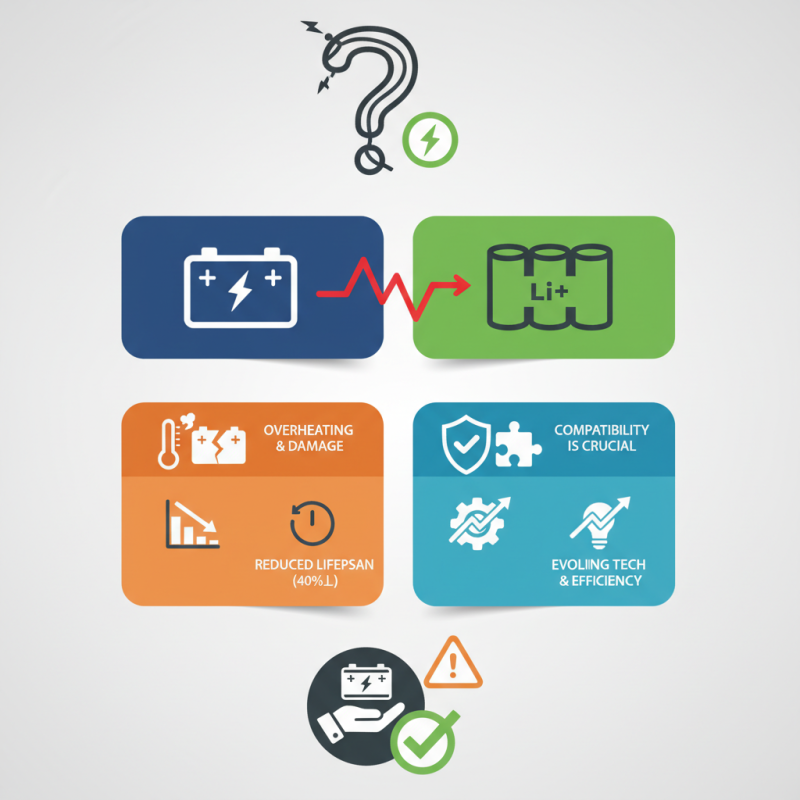
When considering battery types, lead acid and lithium batteries differ significantly. Lead acid batteries are heavier and bulkier. They often require regular maintenance, such as checking electrolyte levels. In contrast, lithium batteries are lighter and more efficient. They have a longer lifespan and better energy density. This means they can store more power in a smaller space.
Using a lead acid charger on a lithium battery can be dangerous. The charge voltages and algorithms differ, potentially leading to overcharging. This could cause lithium batteries to swell or even catch fire. Understanding these differences is crucial for safety. Always refer to manufacturer guidelines when charging. It’s easy to overlook these details, but safety should come first.
Adopting the right charging practices is vital. Remember, lithium batteries need a specific charger designed for them. Failing to use the correct charger can lead to malfunctions or accidents. Engage in continuous learning about battery technologies. This knowledge will empower you to make safer choices.
: Lead acid batteries are heavier and bulkier. Lithium batteries are lighter, more efficient, and have a longer lifespan.
A lead acid charger doesn't match lithium batteries' charging requirements. This can lead to overheating or even fire hazards.
Always use a charger specifically designed for lithium batteries. Check the manufacturer’s recommendations before charging.
A proper charger needs a temperature sensor, multi-stage charging, and a protection circuit. These features enhance safety and battery life.
Using the wrong charger can cause overheating, fires, or reduce battery lifespan significantly. It’s a risk not worth taking.
Knowledge about batteries helps you make informed, safer choices. It empowers users to avoid costly mistakes related to charging practices.
It’s advisable to monitor the battery temperature throughout the charging process to ensure safety and prevent overheating.
Multi-stage charging optimizes the charging process, enhances efficiency, and helps maintain battery health overall.
Yes, improper charging methods can reduce battery lifespan by up to 50%, according to research. Proper care is crucial.
Overlooking specifications may lead to serious safety hazards, including overheating or premature battery failure. Take it seriously.
In the discussion surrounding the question, "Can I use a lead-acid charger for a lithium battery?" it is important to understand the fundamental differences between lead-acid and lithium batteries. Lead-acid chargers are designed for different voltage and charging profiles, which can pose significant risks when used on lithium batteries, including potential damage and safety hazards such as overheating or fire.
To ensure safe and effective charging of lithium batteries, it is crucial to prioritize the use of proper lithium battery chargers equipped with essential features such as automatic shut-off and appropriate voltage regulation. Additionally, following best practices for maintaining lithium battery health—like avoiding complete discharges and operating within the recommended temperature range—can prolong their lifespan and performance. By adhering to these safety precautions, users can effectively avoid the pitfalls associated with improper charging methods.

 E-Tronde Charger