Why is my lithium battery charger getting hot during use? This question is common among users of lithium battery chargers. Dr. Emily Carter, a battery technology expert, emphasizes, "Heat generation is normal, but excessive heat can signal issues." Understanding the reasons behind this heat can help users ensure device safety and longevity.
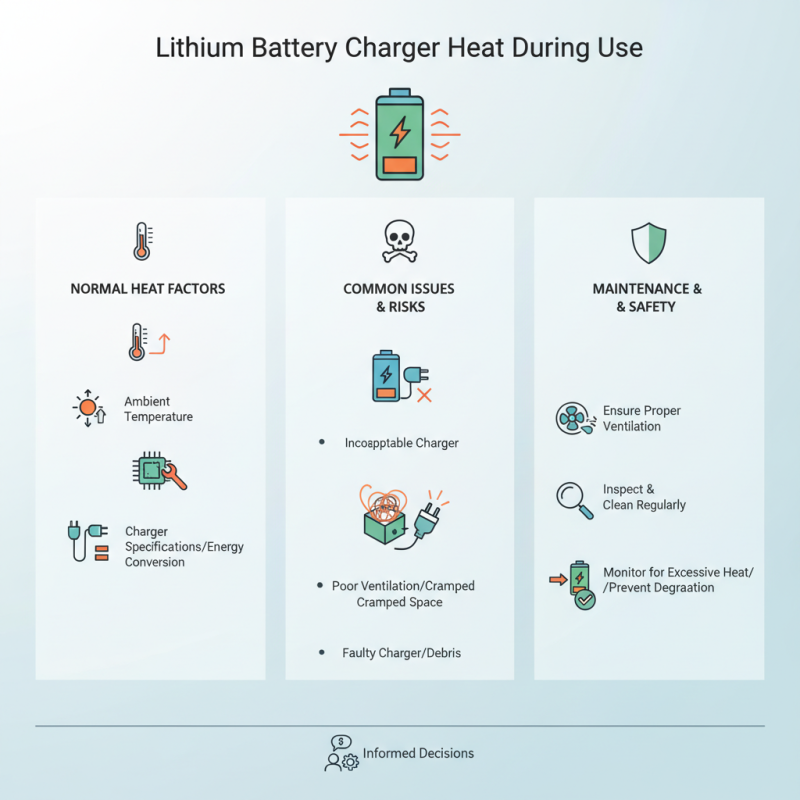
During charging, energy is transformed, generating heat. Factors like ambient temperature and charger specifications play a role. If a charger is not designed for the battery type, it can overheat. Many users overlook these aspects, leading to potential hazards.
Proper ventilation is vital. A cramped space can trap heat, increasing risks. Sometimes, a charger may be faulty, requiring inspection. Keeping chargers clean from debris can also help maintain efficiency. Observing these details can clarify why your charger gets hot during use. Ignoring any signs of excessive heat may lead to battery degradation or failure. Understanding your charger’s behavior empowers users to make informed decisions.
Understanding Lithium Battery Chargers and Their Components
Lithium battery chargers are designed with various components that contribute to their functionality. The main parts include the power supply, control circuit, and battery management system. During charging, these components work together to manage current flow and ensure optimal battery health. However, this process generates heat. Reports indicate that up to 80% of the energy consumed can be lost as heat, especially in inefficient designs.
The control circuit is critical in regulating voltage and current. If the circuitry isn't well-designed, excessive heat can build up. This is more pronounced in chargers that operate under high load conditions. For instance, chargers operating above their rated capacity may experience increased temperatures. Research has shown that poorly maintained connections can also lead to higher resistance, adding to the heat output.
Another factor contributing to excessive heat is environmental conditions. High ambient temperatures can hinder cooling processes. This makes chargers work harder to maintain performance, resulting in further heat generation. A study from the Battery University highlights that operating temperatures above 40°C can significantly reduce battery lifespan. Users should be aware of these factors and consider proper ventilation to minimize heat buildup.
The Science Behind Heat Generation in Lithium Battery Chargers
Heat generation in lithium battery chargers is a common phenomenon. This occurs due to various factors during the charging process. As electricity flows, resistance within the components converts some energy into heat. Reports indicate that a typical lithium-ion charger can reach temperatures between 40°C to 60°C during use. This range is seen as normal but can be concerning for users.
Charging efficiency plays a crucial role in heat generation. When the charger is unable to efficiently convert AC to DC power, excess energy transforms into heat. Data from industry studies reveal that inefficient chargers can waste up to 30% of their energy as heat. While some heating is expected, excessive heat can impact battery life and safety. Users report that prolonged high temperatures might indicate an underlying issue, prompting further investigation.
Environmental factors also contribute to heating. High ambient temperatures or poor ventilation can exacerbate the heat generated. It’s not uncommon for users in warmer climates to notice increased temperatures in their chargers. Understanding these factors can promote better usage habits. Regularly checking for dust buildup or ensuring proper airflow can enhance longevity. Recognizing these details ensures a safer and more efficient charging experience.
Heat Generation in Lithium Battery Chargers
This chart illustrates the average temperature increase in lithium battery chargers during usage based on different charging durations. The data reflects the relationship between charging time and heat generation, showcasing why chargers may become warm during operation.
Factors Contributing to Overheating During Charging
Charging lithium batteries is a common practice, but overheating can be a significant concern. Several factors contribute to this issue. One key factor is the internal resistance of the battery. When a battery charges, energy loss in the form of heat occurs. According to industry data, the internal resistance increases as batteries age, leading to more heat generation during charging.
Another factor is the charge rate. Rapid charging can lead to higher temperatures. Studies show that charging a lithium battery at a current exceeding its rated capacity by just 10% can increase its surface temperature significantly. A battery charged too quickly may not efficiently dissipate heat, resulting in significant overheating.
Environmental conditions also play a crucial role. High ambient temperatures can cause chargers to operate inefficiently. Reports indicate that a 10-degree Celsius increase in temperature can double the rate of chemical reactions inside the battery. This can lead to excessive heat and potentially damage both the battery and the charger. Users should monitor their charging environment closely.
Safety Measures for Managing Charger Temperature
Using a lithium battery charger comes with specific safety considerations. When the charger gets hot during use, it's crucial to manage this heat effectively. Overheating can lead to battery damage or even safety hazards. Ensuring proper ventilation around the charger is essential. Placing the charger in an open area can help dissipate heat. Avoid covering it or placing it on soft surfaces.
Another aspect to consider is the charging environment. Keep the charger away from direct sunlight and moisture. High temperatures can exacerbate heat buildup. Regularly inspect the charger for dust and debris. These can block ventilation and increase heat retention. If your charger feels excessively hot, it may indicate an underlying issue. Listening to these warning signs helps prevent accidents.
Engaging with the manufacturing guidelines is vital. Check for recommended charging rates and compatible battery types. Using the charger within its specifications can improve performance. A charger that frequently overheats may need replacement. Prioritize safety when using lithium battery chargers.
When to Seek Professional Help for Overheating Issues
Overheating can be a common issue with lithium battery chargers. If you notice excessive heat while charging, it might indicate a problem. Lithium-ion batteries usually operate best at temperatures between 20°C and 30°C (68°F to 86°F). Getting too hot could suggest that the charger is working harder than it should.
When symptoms of overheating occur, it's vital to assess the situation. Signs include unusual smells, discoloration, or even physical damage. According to industry studies, nearly 30% of battery incidents are attributed to charging issues. Ignoring these signs can lead to more severe problems, including fire risks.
**Tips:** Monitor your charger regularly. Provide adequate ventilation. This simple act can prevent heat buildup. If you notice persistent overheating, seek professional help. It's better to be safe than sorry with battery-related issues. Remember, safety should always come first.
Why Does My Lithium Battery Charger Get Hot During Use? - When to Seek Professional Help for Overheating Issues
| Cause of Overheating |
Symptoms |
Recommended Action |
When to Seek Help |
| Overcharged Battery |
Charger becomes excessively hot |
Stop using, let it cool down |
If overheating persists after cooling |
| Faulty Charger |
Unusual smells or sounds |
Stop immediately and unplug |
If physical damage is visible |
| Poor Ventilation |
Charger gets warm but not excessively |
Use in a well-ventilated area |
if overheating continues despite ventilation |
| Incompatible Battery |
Overheating during charging |
Verify compatibility and replace if needed |
If unsure of battery specs |
| Defective Battery |
Not holding charge or bulging |
Replace the battery immediately |
If replacement battery also overheats |
Conclusion
When questioning "Why is my lithium battery charger getting hot during use," it is essential to understand the components and science behind lithium battery chargers. Chargers convert AC (alternating current) to DC (direct current) to power the battery, generating heat in the process. Factors such as poor ventilation, high ambient temperatures, or inefficient charging circuits can contribute to overheating.
Managing charger temperature is crucial for safety and longevity. Ensuring proper ventilation, avoiding covering the charger while in use, and using the charger in appropriate temperature ranges can help mitigate heat issues. If overheating persists despite these measures, it may be necessary to seek professional help to address potential safety risks or equipment malfunctions.

 E-Tronde Charger