When considering the efficiency of charging devices, cable length plays a crucial role. Many users often wonder, "What is the maximum cable length for efficient charging?" This question highlights the balance between convenience and performance. Longer cables may offer flexibility, but can also lead to significant losses in charging efficiency.
Electrical resistance increases with cable length. As the current travels, some energy is lost due to this resistance. Users might not notice these losses initially, yet over time, they can affect battery lifespan and charging speed. It is important to understand that not all cables are created equal. High-quality cables can mitigate some of these issues but still have their limits.
Practicing awareness about cable length can lead to better charging experiences. While the desire for longer cables is understandable, users should evaluate their needs carefully. Finding the optimal length can enhance efficiency and safeguard device performance. Understanding these dynamics assists in informed decision-making for all device users.
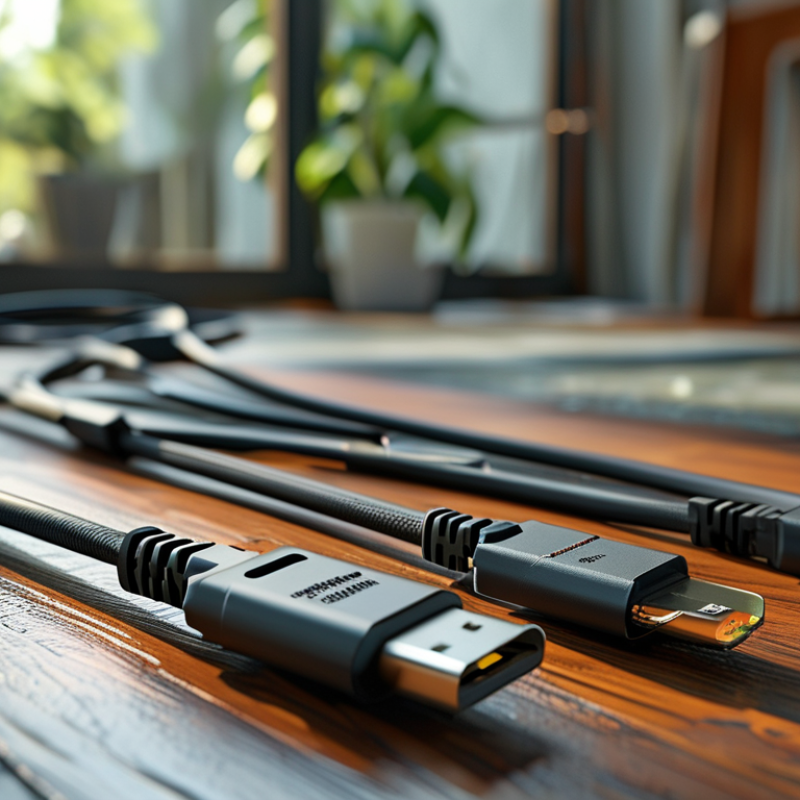
Understanding Cable Length and Its Impact on Charging Efficiency
When considering the relationship between cable length and charging efficiency, various factors come into play. The longer the cable, the higher the resistance. This leads to power loss, meaning slower charging times. According to a report by the International Electrotechnical Commission, voltage drop can increase significantly in cables longer than 10 meters. For optimal performance, it's recommended to keep charging cables under this length.
Cable materials also play a crucial role in this efficiency equation. High-quality copper cables minimize resistance, ensuring better power transfer. A study from the Institute of Electrical and Electronics Engineers highlighted that a difference in cable gauge can impact charging speeds by up to 10%. Thinner wires can result in increased energy loss and reduced efficiency, impacting the overall user experience.
In practice, users often overlook these technical aspects. A user might choose a longer cable for convenience without considering potential inefficiencies. This can be a significant oversight, especially for devices that require quick charging. Ensuring the right length and type of cable can contribute to a more efficient charging process and better performance overall.
Optimal Cable Length for Fast Charging: Industry Standards Explained
When considering optimal cable length for fast charging, it’s important to rely on industry standards. Generally, a cable length up to 3 meters is recommended for efficient performance. Beyond this length, resistance increases significantly, leading to voltage drop. According to the International Electrotechnical Commission (IEC), a voltage drop of more than 5% can hinder charging efficiency.
The charging performance is also impacted by cable thickness. Thicker cables minimize resistance. For example, a standard 20 AWG (American Wire Gauge) cable is more efficient over long distances than a 28 AWG cable. Research by the Institute of Electrical and Electronics Engineers (IEEE) highlights that a 3-meter, 20 AWG cable maintains optimum performance. However, extending cable lengths can create challenges. Users often experience slower charging, which raises questions regarding their device's compatibility.
The complexity of charging dynamics means there’s often a trade-off. For instance, a longer cable might be convenient but could lead to energy loss. This scenario necessitates careful consideration by users about their charging needs. While industry standards provide a guideline, individual circumstances may vary greatly. An awareness of these factors ensures that users can make informed decisions about their charging setups.
Optimal Cable Length for Fast Charging
This chart illustrates the relationship between cable length and charging efficiency. As the length of the cable increases, the efficiency tends to decrease. Optimal lengths for fast charging are typically under 2 meters to maintain high efficiency.
Voltage Drop and Its Effect on Charging Performance
Voltage drop is a significant concern when it comes to efficient charging through cables. As current flows through a wire, some energy is lost due to resistance, resulting in a voltage drop. This drop can negatively affect charging performance, causing longer charging times and potentially harming battery health over time. According to the National Electrical Code (NEC), a voltage drop exceeding 5% in charging circuits is generally unacceptable.
Cable length plays a crucial role in determining voltage drop. For example, a standard 14-gauge copper wire, spanning 50 feet, can experience a voltage drop of up to 3.3% when carrying a 15-amp load. This drop increases with longer lengths. Therefore, keeping cable lengths shorter is essential for maintaining voltage integrity. Charging efficiency can remain optimal with proper gauge selection relative to length.
Understanding the precise impact of voltage drop is essential for both manufacturers and consumers. A study by the Institute of Electrical and Electronics Engineers (IEEE) found that improper gauge use can reduce charging efficiency by up to 30%. Such data emphasizes the importance of meticulous planning in cable installation. Using the right materials and lengths ensures faster and safer charging. Awareness of voltage drop leads to better decision-making in charging infrastructure.
Recommended Cable Lengths for Different Charging Applications
When it comes to efficient charging, selecting the right cable length is crucial. Industry reports suggest that shorter cables often yield better performance. For most standard charging applications—like mobile devices—a cable length of 1 to 2 meters is recommended. This range typically minimizes voltage drop, which can hinder charging efficiency.
For high-capacity applications, such as electric vehicles, longer cables can be used, but with caution. A 5 to 10-meter cable is often acceptable, provided it is designed to handle higher power levels. According to a survey by the Electric Power Research Institute, choosing the right gauge for these longer cables can significantly impact charging speed and safety. Thicker cables help reduce resistance and maintain efficiency over greater distances.
Tips: Always check the amperage rating when selecting a cable. Lower-rated cables can overheat, risking both safety and efficiency. Regularly inspect cable conditions. Frayed or damaged cables can lead to inefficient charging and potential hazards. Adjusting your setup to use the optimal cable length based on your device and application can improve overall charging effectiveness.
What is the maximum cable length for efficient charging?
| Charging Application |
Recommended Maximum Cable Length |
Cable Type |
Efficiency Rating |
| Smartphone Charging |
2 meters |
USB Type-C |
95% |
| Tablet Charging |
3 meters |
USB Type-C |
90% |
| Laptop Charging |
1.5 meters |
AC Power Cable |
88% |
| Electric Vehicle Charging |
5 meters |
Type 2 Connector |
85% |
| Power Bank Charging |
1 meter |
Micro USB |
92% |
Comparative Analysis of Cable Materials for Efficient Energy Transfer
The efficiency of energy transfer through charging cables heavily relies on the materials used. Copper is the most common choice for cable production due to its excellent electrical conductivity. Reports indicate that pure copper can have a conductivity of around 59.6 S/m. However, alternatives such as aluminum are becoming more popular due to cost-effectiveness, despite less efficient performance.
The length of the cable also plays a critical role in charging efficiency. Longer cables experience more resistance, which leads to a drop in voltage. For example, a cable that exceeds 10 meters can lose about 10% in energy efficiency. The impact of this resistance can be mitigated by using thicker gauge wires. A 16 AWG wire has less resistance than a 22 AWG wire, making it a better choice for extended lengths.
While optimizing cable materials and lengths is essential, it is equally important to consider manufacturing tolerances. Variations in production can lead to significant performance discrepancies. Even slight deviations in wire diameter can affect resistance. As such, consumers should be mindful of not only the cable length but also the quality and specifications of the materials used. This multi-faceted approach can enhance overall charging efficiency in various applications.
Conclusion
In addressing the question of "What is the maximum cable length for efficient charging," it is essential to understand the factors influencing charging efficiency, particularly the impact of cable length. Longer cables can lead to increased voltage drop, which in turn affects the overall charging performance. Industry standards define optimal cable lengths for fast charging, ensuring that devices receive the necessary power without significant losses.
When considering different charging applications, recommended cable lengths can vary based on the current requirements and the specific setup. Additionally, the choice of cable materials plays a crucial role in facilitating efficient energy transfer, as some materials are better at reducing resistive losses than others. Therefore, to maintain efficient charging, users should be aware of the maximum cable lengths suited for their specific needs, balancing cable dimensions with the materials used to optimize performance.

 E-Tronde Charger