Why are lithium battery chargers more expensive than lead-acid? The answer involves more than a higher price tag. Lithium chargers often include intelligent control systems, tighter voltage regulation, and communication with a battery management system. These features help monitor temperature, current, cell balance, and charging progress. A lead-acid charger usually follows a simpler charging profile. It may use bulk, absorption, and float stages with fewer feedback requirements.
The difference becomes clearer on a workshop bench. A lithium charger must deliver stable power without overcharging sensitive cells. Some models adjust output when the battery reaches its target voltage. Others stop charging when the BMS reports a fault. That extra control requires sensors, software, stronger circuit protection, and careful testing. It also increases development and certification costs. Small production volumes can raise the price further.
Still, the comparison is not perfectly fair. Not every lithium charger is advanced, and not every lead-acid charger is basic. A premium lead-acid model may include temperature compensation, diagnostics, and durable components. In practical service work, charger quality often matters more than chemistry alone. A cheap charger can create heat, shorten battery life, or cause unreliable operation. That risk deserves attention.
Real value depends on the complete system. Consider charging speed, expected lifespan, efficiency, warranty support, and battery compatibility. The most expensive option is not automatically the best choice. However, a properly designed lithium charger can protect a costly battery and deliver more predictable performance over time. The details matter. That is where the price becomes easier to understand.
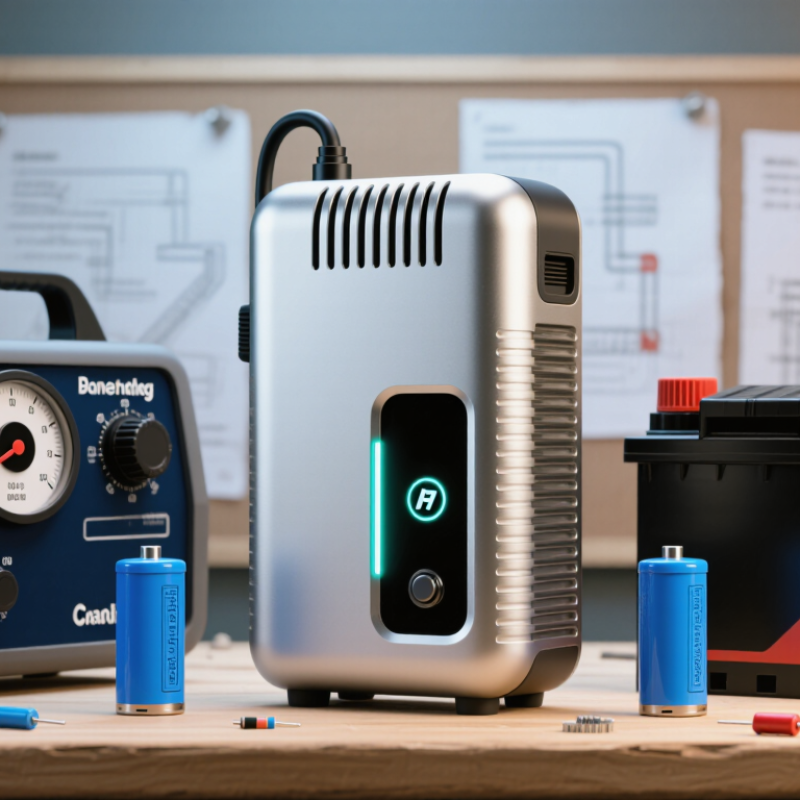
Why Are Lithium Chargers More Expensive Than Lead Acid?
A lithium charger is not simply a faster version of a lead-acid charger. It follows a tighter charging profile, usually constant-current and constant-voltage, with stricter voltage limits. Lead-acid chargers often use bulk, absorption, and float stages. That float stage can remain active for long periods. Lithium batteries generally need controlled cutoff instead.
The difference becomes clearer inside the charger. Lithium systems may require battery-management communication, cell balancing support, temperature protection, and rapid fault detection. These circuits add components, testing, and engineering time. The International Energy Agency reported that electric-vehicle battery demand exceeded 750 GWh in 2023. More batteries mean greater pressure for precise, scalable charging equipment. Still, battery growth does not automatically make chargers cheaper.
BloombergNEF reported an average lithium-ion battery-pack price of 115 dollars per kWh in 2024, down 20% from the previous year. That figure describes battery packs, not chargers. Charger prices can remain high because safety controls and firmware do not shrink as quickly as cells. A lead-acid charger may tolerate a wider charging pattern. Lithium chemistry is less forgiving.
Small details matter. A faulty temperature sensor, loose connector, or incorrect voltage setting can interrupt charging. That protection is useful, but it is not free. In practical installations, I have seen buyers compare wattage alone. That is an incomplete comparison. The cheaper unit may charge, yet offer weaker diagnostics or poor battery compatibility. Standards help, but specifications still deserve careful checking.
Why Are Lithium Chargers More Expensive Than Lead Acid?
How Battery Chemistry Affects Charger Design and Cost
Lithium batteries need tighter control during charging. Their voltage rises quickly near full capacity. A charger must therefore regulate current and voltage with greater precision. It also needs protection against overcharging, overheating, and abnormal cell behavior. These controls add sensors, software, and testing time.
Lead-acid batteries usually accept a simpler charging pattern. Their voltage changes more gradually. Many chargers can use bulk, absorption, and float stages with basic monitoring. A float stage keeps the battery ready without constant high voltage. Lithium batteries generally require a different profile and careful cutoff settings. Holding them at the wrong voltage can shorten service life or create serious safety concerns.
In practical installation work, wiring quality affects both charger performance and cost. Thin cables can create voltage drops, confusing the charger’s readings. Lithium systems may also need communication with a battery management system. That connection can monitor temperature, current, and individual cell limits. More components mean more design checks and failure points. That is not always convenient.
A cheaper charger may appear suitable on paper. It may still use an inaccurate charging profile. Technicians should check battery voltage, chemistry, capacity, temperature range, and manufacturer requirements before installation. A small mismatch can cause repeated shutdowns or incomplete charging. The extra price often reflects precision, protection, and validation rather than faster charging alone.
Battery chemistry determines the voltage limits and charging controls a charger must manage. The chart shows representative per-cell voltage targets for conventional lead-acid and lithium-ion batteries.
Lead-acid batteries commonly use absorption and continuous-float charging. Lithium-ion batteries require tighter constant-current/constant-voltage control, precise charge termination, temperature protection, and often battery-management-system coordination. These additional control and safety requirements can increase charger design and manufacturing costs. Values are representative engineering ranges and vary by battery subtype.
Lithium chargers cost more because they are not simple power supplies. Their components must manage a narrower charging window and communicate with the battery’s management system. A dedicated control board monitors voltage, current, temperature, cell balance, and charging faults. Lead-acid chargers usually need fewer sensors and simpler control logic.
The power stage also adds cost. Lithium chargers often use tighter current regulation, isolated circuitry, cooling fans, thermal cutoffs, and electromagnetic-interference filters. Some models include CAN or other communication hardware, allowing the charger to reduce output when the battery reports high temperature or abnormal voltage. These parts raise testing and assembly costs. They also require careful calibration.
The figures show the wider market pressure. BloombergNEF’s 2024 Lithium-Ion Battery Price Survey reported an average battery-pack price of 115 dollars per kilowatt-hour, a 20% decline from 2023. Lower pack prices do not automatically make the charger cheaper; charger electronics remain a separate cost center. The International Energy Agency reported that lithium iron phosphate batteries represented about 40% of the global electric-car battery market in 2023, highlighting the need for charging profiles suited to different lithium chemistries. IEC 62477-1 safety requirements can also add insulation, protection, and verification costs.
One detail is easy to miss. A cheaper charger may work during normal conditions but respond poorly to heat, aging, or communication errors. That estimate is not perfect. Real prices still depend on power rating, enclosure design, certification testing, and production volume.
| Cost Driver or Component | Lead-Acid Charger | Lithium Charger | Typical Lithium Cost Increase | Why It Increases the Price |
|---|---|---|---|---|
| Power conversion stage | Basic AC/DC conversion with a fixed or multi-stage charging profile | More accurately controlled constant-current and constant-voltage operation | US$8–25 | Lithium batteries require tighter voltage and current regulation to prevent overcharge and cell damage. |
| Microcontroller and firmware | Simple charging logic; limited monitoring | Programmable charging algorithms, fault handling, logging, and communication functions | US$5–18 | Lithium charging commonly requires software-based control of voltage, current, temperature, and battery status. |
| Battery communication interface | Often not required | May include CAN, RS-485, or another digital interface to the battery management system | US$4–20 | Communication allows the charger to receive permission, voltage limits, temperature data, and fault commands from the battery pack. |
| Safety and protection circuits | Overcurrent, short-circuit, and basic thermal protection | More precise overvoltage, overtemperature, reverse-polarity, isolation, and abnormal-battery protection | US$6–22 | Lithium cells have narrower safe operating limits and can be damaged by incorrect charging conditions. |
| Voltage and current sensing | Standard voltage feedback and basic current measurement | Higher-accuracy voltage, current, and temperature measurement | US$3–12 | Accurate feedback is needed to keep the charger within the battery manufacturer’s specified limits. |
| Thermal management | Fan or passive cooling, depending on power | More controlled cooling with additional sensors and thermal derating | US$3–15 | Lithium charging performance and safety depend strongly on battery and charger temperature. |
| EMI filtering and electrical isolation | Basic filtering and isolation appropriate to the design | Often enhanced filtering, shielding, isolation, and communication protection | US$4–16 | Higher switching performance and digital communication can require additional electromagnetic compatibility measures. |
| Connector and wiring system | Standard two-wire output connector | Higher-rated power connector plus signal or communication wiring | US$3–15 | Lithium systems may need separate communication, interlock, and temperature-sensing connections. |
| Certification and validation | Electrical safety and EMC testing | Electrical safety, EMC, battery-system compatibility, software validation, and additional documentation | US$5–30 per unit at moderate volume | Testing and engineering costs are spread across production volume, so specialized lithium models can have higher unit costs. |
| Estimated total additional cost | Baseline | Higher-complexity design | Approximately US$41–173 | The final price difference depends on power rating, communication requirements, certification, production volume, and whether the charger is customized for a specific battery pack. |
Lithium chargers cost more because lithium cells need tighter control during charging. A suitable charger must match the battery’s voltage, current, and chemistry. It should communicate with the battery management system when required. Lead acid systems are often more forgiving. Lithium batteries are not.
Safety begins with overcharge protection and automatic shutdown. Short-circuit protection is essential. Reverse-polarity protection prevents damage from incorrect connections. Temperature sensors should pause charging when cells become too hot or too cold. Cell balancing helps prevent one cell from reaching a dangerous voltage before the others. A strong enclosure, insulated terminals, and correctly rated cables also matter.
Charging should happen in a dry, ventilated area away from heat and flammable materials. Inspect the cable before every use. Do not charge a swollen, cracked, wet, or unusually warm battery. A charger with a display can reveal abnormal voltage or temperature changes early. Certified testing and compliance with applicable local electrical standards add another layer of confidence. Still, certification does not replace proper installation or routine inspection. No checklist is perfect. In practice, users sometimes overlook damaged connectors because the charger still appears to work. That small mistake can become a serious failure. A qualified technician should verify unfamiliar systems, especially those used in vehicles, storage rooms, or high-current applications.
Lithium chargers often cost more because they manage a narrower charging range. They must communicate with a battery management system and control current precisely. Many units also monitor temperature, voltage, and charging stages. Lead-acid chargers usually use a simpler voltage pattern. That difference increases engineering, testing, and component costs.
The higher charger price can become reasonable over years of regular use. Lithium batteries typically accept energy more efficiently, so less electricity is lost as heat. They also recharge faster and support many more cycles when used correctly. In a warehouse, this may mean fewer battery changes during an eight-hour shift. A charger that finishes reliably before the next shift can reduce idle equipment and labor delays. The savings are not dramatic every day. They accumulate quietly.
Maintenance details matter. Lithium systems usually avoid watering routines and reduce corrosion around terminals. Their stable voltage can also improve equipment performance near the end of a work period. Still, the payback is not guaranteed. Light-use vehicles may never recover the higher charger cost. Extreme heat, poor ventilation, or incorrect settings can shorten service life. I have seen well-designed systems perform poorly when operators rush connections or ignore warning indicators. That is an uncomfortable reminder: better hardware cannot repair careless charging habits. A realistic comparison should include electricity, downtime, maintenance, replacement cycles, and local operating conditions, not only the purchase price.
They need precise control over voltage, current, temperature, and charging stages. Their electronics are more complex than basic power supplies. The difference is real.
A control board, temperature sensors, current regulators, and voltage monitors increase the price. Cooling fans, thermal cutoffs, insulation, and interference filters also add expense. Each part requires testing and calibration.
Some chargers communicate with the battery management system. They can reduce output when temperatures rise or voltage becomes abnormal. This improves protection but requires additional hardware and software.
Yes. Lithium chemistries can require different voltage limits and charging behavior. A profile designed for one chemistry may not suit another. That mistake can reduce performance or shorten service life.
It may work under normal conditions. However, it might respond poorly to heat, battery aging, or communication errors. The cheaper option is not automatically the better value.
Efficient charging wastes less electricity as heat. Faster recharging can reduce battery changes during an eight-hour work shift. Reliable charging may also reduce equipment waiting time and labor delays.
They usually avoid watering routines and reduce corrosion around terminals. Stable voltage can help equipment maintain performance near the end of a work period. Small savings can accumulate quietly.
Light-use vehicles may not operate enough to recover the extra cost. Extreme heat, poor ventilation, and incorrect settings can shorten service life. Payback varies greatly.
Compare purchase price, electricity use, downtime, maintenance, replacement cycles, and operating conditions. Power rating, enclosure design, certification testing, and production volume also affect price. The estimate will never be perfect.
Lithium chargers are more expensive because they are designed for a more demanding charging process than lead-acid chargers. Why are lithium battery chargers more expensive than lead-acid? Lithium batteries require precise voltage control, multi-stage charging, cell balancing, and communication with a battery management system to prevent overcharging, overheating, or deep discharge. These requirements make the charger design more complex and increase the cost of its electronic components.
Additional safety features, such as temperature monitoring, automatic shutoff, short-circuit protection, and fault detection, also contribute to the higher price. However, the initial investment can be balanced by long-term benefits. Lithium batteries generally charge faster, operate more efficiently, last longer, and maintain more consistent performance than lead-acid batteries. As a result, a properly designed lithium charger can support better energy management, reduce maintenance needs, and provide greater overall value throughout the battery system’s service life.
E-Tronde Charger