Explore our advanced catalog of industrial grade power solutions engineered for reliability, safety, and operational longevity under harsh field conditions.
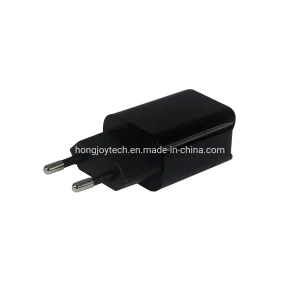
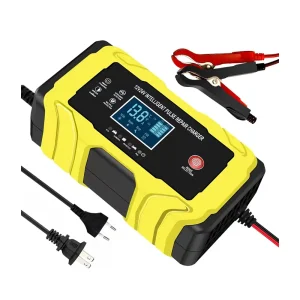
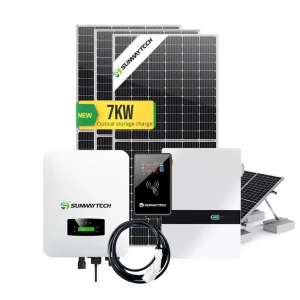
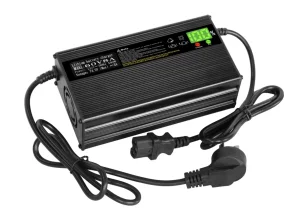
Industrial charging applications require robust topologies that deviate significantly from consumer electronics. Modern Industrial Grade Chargers act as the backbone of automated warehouses, municipal electric vehicle fleets, construction machinery, and remote telecommunications cells. Achieving optimal performance requires a convergence of high frequency power factor correction (PFC), digital microcontroller (MCU) orchestration, and state-of-the-art wide bandgap semiconductors.
Legacy systems relied on standard silicon MOSFETs that suffered from substantial switching losses when operating at high frequencies. Leading Chinese factories have shifted to SiC and GaN materials. This leap enables power conversion efficiencies exceeding 96%, minimizing thermal generation, and drastically reducing the footprint of passive components.
By scaling the switching frequencies up to several hundred kilohertz, manufacturers can produce lighter, smaller, and vastly more energy-dense high-power charging platforms.
To achieve high reliability, modern industrial systems must minimize electromagnetic interference (EMI) and power stress. The adoption of soft-switching techniques—specifically Zero Voltage Switching (ZVS) and Zero Current Switching (ZCS) within Resonant LLC loop topologies—guarantees that components operate within safe electrical margins.
This drastically improves MTBF (Mean Time Between Failures) metrics, making the hardware ideal for heavy duty cycle operations in 24/7 manufacturing plants.
Established in 2001, Shenzhen E-Tronde Charger Co., Ltd. has dedicated over two decades to the comprehensive development, production, and worldwide sales of advanced battery chargers and robust power supply products. Through persistent R&D investments, the firm has positioned itself as a benchmark innovator in global power electronics.
E-Tronde operates from a state-of-the-art facility spanning over 10,000 square meters, staffed by a dedicated group of 100+ highly trained professionals. The engineering division boasts a team of more than 10 veteran developers, ensuring tailored OEM/ODM configurations that conform to strict global compliance frameworks.
Core Facilities Snapshot:
Shenzhen E-Tronde advanced SMT and automated transformer production line facility
The global demand for high-reliability chargers requires absolute consistency in component sourcing and production line output. The Chinese manufacturing model has evolved from high-volume assembly to smart automation and deep integration.
By manufacturing essential components like magnetic transformers, custom wound copper coils, and aluminum enclosures in-house, E-Tronde limits exposure to external component shortages, stabilizing production lead times.
Every industrial charger undergoes strict quality checks, including automated optical inspections (AOI), full-load burn-in tests under elevated temperatures, and high-voltage dielectric isolation screening.
Located in Shenzhen's hardware ecosystem, the factory rapidly prototypes custom solutions, accelerating the transition from digital schematic design to functional deployment.
Procurement directors and systems integrators evaluate hardware configurations based on lifecycle cost rather than initial unit pricing. The comparison below highlights why specialized design adjustments are necessary for industrial operations.
| Technical Standard | Consumer Grade Adapters | Industrial Grade Chargers (E-Tronde Spec) |
|---|---|---|
| Operating Duty Cycle | Intermittent (typically 2-6 hours continuous load) | Continuous (100% load at 24/7 duty cycle) |
| Thermal Management | Passive plastic shell (prone to heat entrapment) | Extruded anodized aluminum with intelligent cooling/potting |
| Protection Rating (IP) | IP20 / IP22 (No moisture protection) | IP65 to IP67 (Fully sealed, waterproof, chemical resistant) |
| MTBF Metrics | 5,000 - 10,000 Hours | > 50,000 Hours (Tested under MIL-HDBK-217F) |
| Battery Chemistry Match | Fixed single-curve voltage output | Dynamic multi-stage profiling (LiFePO4, Gel, AGM, Lead-Acid) |
E-Tronde industrial power systems are engineered for diverse environments, offering optimized power distribution in various scenarios:
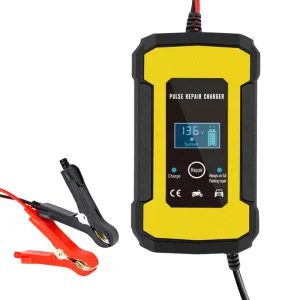
Automated guided vehicles (AGVs) demand quick, high-current charging cycles during short idle windows. Implementing high-power pulse repair technology ensures rapid energy restoration without overheating battery cells or compromising cycle life.
Operating electric earthmovers, heavy lifts, and industrial machinery exposes systems to dust, grease, and rain. The adoption of IP67 enclosures and hardwired chassis configurations safeguards charging hardware from external particulates.
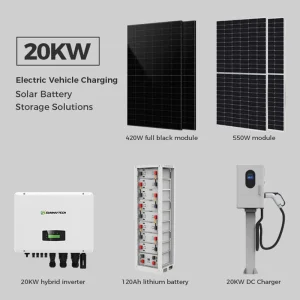
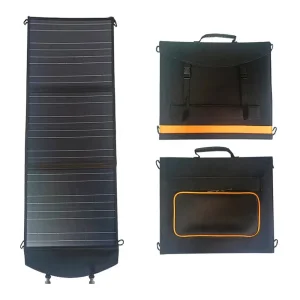
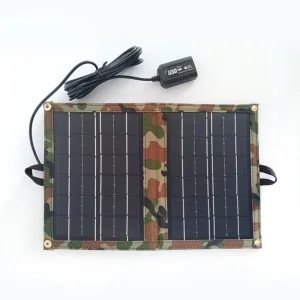
Remote cell sites are powered by hybrid solar arrays. Smart solar charger inverters convert solar energy to battery-safe DC power. This prevents damage from input voltage fluctuations and microgrid feedback.
Home microgrids with integrated energy storage require intelligent communication between solar panels, storage batteries, and EVs. Wallbox chargers with Modbus or CAN bus protocols allow smart power allocation based on peak tariff rates.
Explore detailed technical answers concerning performance optimization, circuit topography, and custom configurations for global procurement networks.
Pulse repair technology utilizes high-frequency, high-voltage electrical pulses to break down lead sulfate crystals that accumulate on battery plates over time. This process, known as desulfation, restores the battery’s internal chemical balance, lowers internal resistance, improves energy retention, and extends the service life of industrial lead-acid, gel, and AGM batteries.
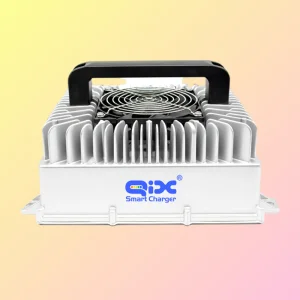
An IP67 enclosure must be fully sealed to block moisture and dust, which prevents the use of open cooling fans. To manage heat, E-Tronde designs custom-molded aluminum alloy cases filled with thermally conductive potting compounds. This design draws heat away from internal semiconductors to the external casing ridges, enabling safe passive cooling.
LiFePO4 batteries depend on a Battery Management System (BMS) to regulate individual cell voltages. Through CAN Bus or RS485 communication, the charger interacts dynamically with the BMS, adjusting output voltage and charging current in real-time according to cell temperature, State of Charge (SoC), and health status. This prevents overcharging and thermal runaway.
For European markets, CE, RoHS, and LVD certifications are required, validating electrical safety and environmental safety. For North American distribution, UL (specifically UL1564 for battery chargers) or ETL certification is necessary, along with FCC Part 15 compliance for electromagnetic interference limits.
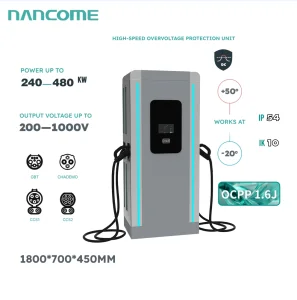
Yes, high-power DC chargers can be connected to local microgrids with hybrid solar inverters and battery energy storage systems (BESS). This setup balances grid load by using stored solar energy during peak demand times, lowering grid operating costs.
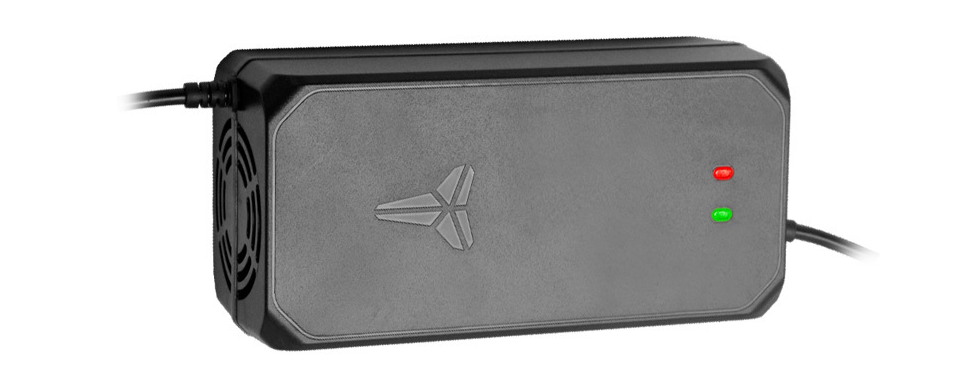
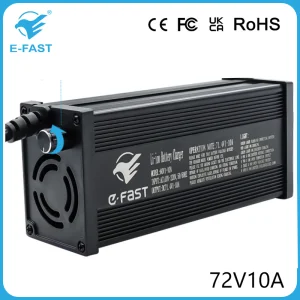
Select from our range of power adapters, solar chargers, and adjustable-current smart chargers, manufactured to meet industrial standards.
 E-Tronde Charger