High-efficiency, custom-calibrated charging profiles optimized for rugged island environments and dynamic grid demands.
Dominica, renowned as the "Nature Island of the Caribbean," is currently undergoing a structural transformation in its power generation and storage infrastructure. As the nation advances its Climate Resilience Execution Agency (CREAD) mandates and aims to become the world’s first fully climate-resilient nation, modernizing the electrical ecosystem is of paramount importance. The vulnerability of traditional centralized utility grids to extreme weather events like tropical depressions and hurricanes has accelerated the integration of decentralized microgrids and commercial Solar Energy Storage Systems (BESS).
Within this transition, Lithium Iron Phosphate (LiFePO4) chemistry has emerged as the premier technology. Its distinct advantages—remarkable thermal stability, high safety threshold, minimal maintenance requirements, and an exceptional cycle lifespan of up to 4,000 to 6,000 cycles at 80% Depth of Discharge (DoD)—make it the ideal choice. However, the performance and lifespan of any LiFePO4 battery system are directly limited by the intelligence and engineering quality of its charger. Utilizing inadequate charging systems risks premature battery degradation, cell imbalance, and safety hazards, underscoring the vital need for high-end, dedicated LiFePO4 specific battery chargers.
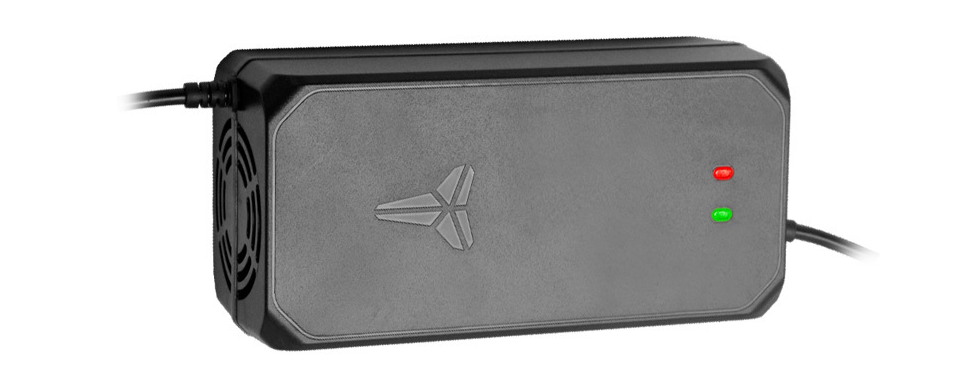
Our industrial chargers incorporate smart algorithms designed to counter the environmental and electrical hazards prevalent in tropical regions.
Unlike lead-acid chargers that utilize damaging float stages, our chargers execute a precise Constant Current / Constant Voltage (CC/CV) profile, halting charge exactly at 3.65V per cell to prevent overcharging.
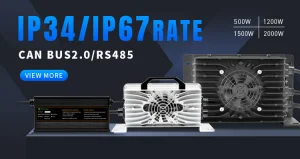
Equipped with integrated CAN-bus 2.0B, RS485, and Modbus interfaces. Real-time telemetry allows the charger to adjust output dynamics based on temperature, voltage, and health status reported by the battery system.
Dominica's tropical humidity and high salt concentrations demand protection. Fanless configurations with specialized potting and aluminum alloy enclosures guard components against internal oxidation.
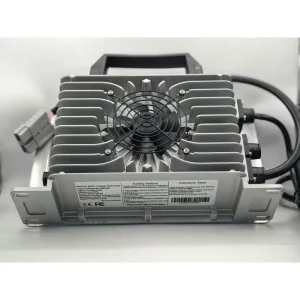
1. Off-Grid Eco-Resorts and Hospitality Units: From Roseau to Portsmouth, Dominica's sustainable tourism sector relies heavily on local microgrids to minimize environmental impact. These installations employ substantial LiFePO4 battery banks coupled with solar PV arrays. However, during periods of low solar output, diesel generators or limited utility lines must charge the battery banks. Our 2000W and multi-kilowatt industrial smart chargers offer the necessary power density to charge battery systems rapidly, minimizing fuel consumption and grid reliance.
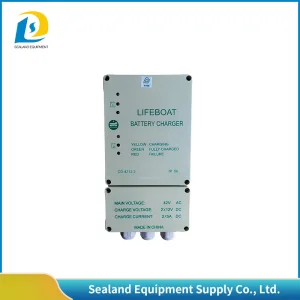
2. Marine Electrification and Coastal Infrastructure: Given Dominica's active fishing fleet and maritime transport network, transitioning to electric outboards and hybrid marine vessels is key to lowering operating costs and ocean pollution. Marine applications present harsh operating environments, featuring continuous vibration and corrosive salt spray. Utilizing specialized chargers like our Marine Lifeboat Battery Charger series—which features conformal-coated PCBs and galvanic isolation—ensures safe, reliable operations at ports and on vessels.
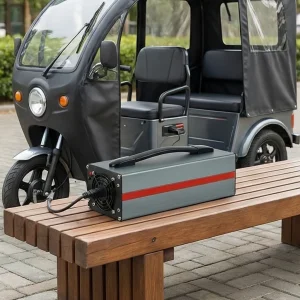
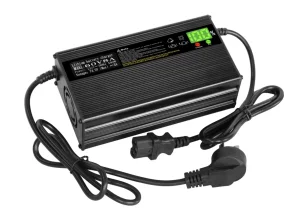
3. Commercial fleets and Urban Micro-Mobility: In municipal centers, the utilization of electric golf carts, utility vehicles, and electric delivery tricycle fleets is rising. These electric fleets require smart charging networks that can handle frequent cycling. Smart chargers equipped with LED and digital displays enable fleet operators to monitor battery voltage, charging currents, and status indicators in real time, preventing diagnostic delays and battery down-time.
4. Telecommunications and Emergency Disaster Recovery: Cellular towers and emergency communications units situated on rugged ridges must remain online during storm events. Standard batteries decay rapidly under prolonged outages, while LiFePO4 cells paired with high-performance industrial DC chargers ensure that telecom backups recharge quickly once power is partially restored, maintaining vital communications when they are needed most.
Founded in 2001, Shenzhen E-Tronde Charger Co., Ltd. has spent over two decades building a reputation as a leading manufacturer in the power electronics and battery charging sector. The company operates a state-of-the-art production facility exceeding 10,000 square meters, backed by a workforce of over 100 professionals and an engineering team containing 10+ industry veterans.
With fully automated SMT lines, advanced wave soldering setups, computer-controlled transformer winding workshops, and dynamic burn-in testing chambers, E-Tronde is built for scale and customization. Our operations are fully certified to ISO9001 and ISO14001 standards. Through structured design and strict component sourcing, we offer Dominica's industrial and commercial sectors direct factory access to robust charger configurations with short lead times and reliable global shipping logistics.
Our commitment to technological innovation ensures our products deliver high efficiency and safety, making us a trusted partner for businesses looking to enhance their power management systems.
Developing battery chargers for island electrical systems requires careful planning. Dominica's electrical grid can experience voltage sags and surges due to varying loads and isolated generation assets. Our product roadmap focuses on stabilizing input fluctuations through wide-voltage range designs (Universal 85V-265V AC input) and Active Power Factor Correction (PFC) circuitry. Our chargers feature a power factor of >0.98, ensuring minimal harmonic distortion and compliance with DOMLEC grid connection standards.
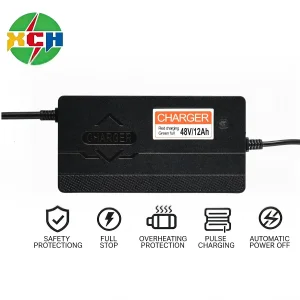
Furthermore, our products are compliant with international standards, including CE, RoHS, FCC, and UL. This compliance ensures that imports into Dominica meet the safety requirements necessary for commercial underwriting and public project funding. The inclusion of reverse polarity, short-circuit, over-voltage, and over-temperature protections ensures that both the charger and the battery systems are protected against common electrical faults.
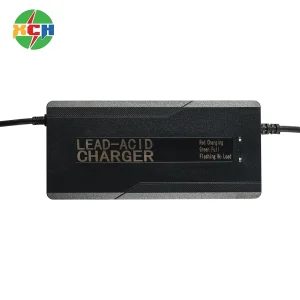
Explore our full line of specialized charging solutions for electric mobility, marine craft, and stationary energy storage systems in Dominica.
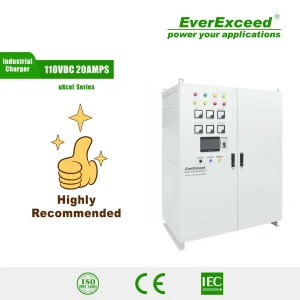
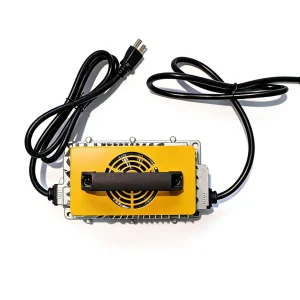
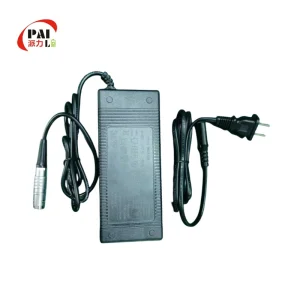
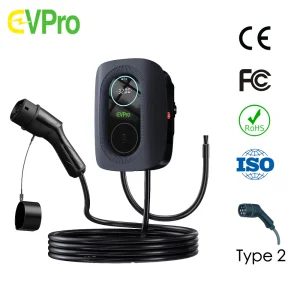
Expert technical insights regarding LiFePO4 battery management and charging dynamics in Dominica.
We do not recommend this approach. Standard lead-acid chargers utilize desulfation pulses and slow float-charge cycles, which can raise voltages to levels that damage LiFePO4 cells. Additionally, lead-acid chargers lack the precise CC/CV control loops required to shut off power at 3.65V per cell. Using a lead-acid charger can cause cell imbalance, shorten cycle life, or trigger the battery's BMS to cut off charging to prevent over-voltage damage.
High humidity and salt spray accelerate corrosion and risk short-circuiting exposed circuit boards. Our chargers resolve this through IP65- or IP67-rated fanless enclosures, conformal coatings on internal PCBs, and aluminum alloys that help prevent corrosion from sea air while maintaining efficient heat dissipation.
Our industrial chargers feature CAN-bus 2.0B, RS485, and Modbus communication options. These interfaces enable the charger to adjust current and voltage dynamically based on real-time data from the BMS, such as cell temperatures, state of charge (SoC), and cell health, ensuring safer operation.
Yes. Our chargers are designed with a wide input voltage window (from 90V to 264V AC) and feature active Power Factor Correction (PFC) circuitry. This design helps stabilize the charging process and protects the charger against local grid sags and surges.
Buying directly from our factory allows for custom voltage adjustments, cable configurations, and specialized communication settings tailored to your project. It also provides direct support from our engineering team, reliable component sourcing, and competitive pricing by avoiding intermediate distributors.
Whether you require custom CAN-bus protocols, high IP-rated enclosures for marine environments, or specific output curves for specialized lithium cells, our engineers can assist you.
Request Custom Technical Proposal E-Tronde Charger