High-efficiency, certified, and engineered adapter architectures built for international deployment.
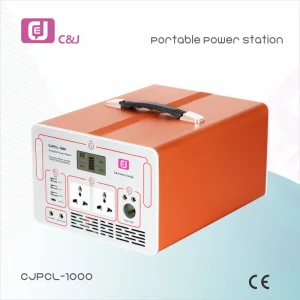
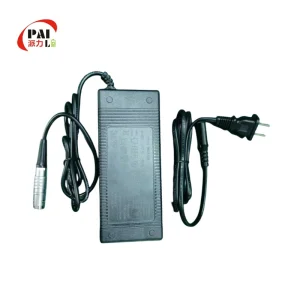
The global mobility landscape has reached an inflection point. With the integration of high-performance mobile devices, electric micro-mobility, and field-operable computing hardware, the demand for highly reliable, universally compatible charging equipment is surging. At the heart of this operational infrastructure is the CE Certified Portable Travel Power Adapter—a critical node that ensures smooth power transitions across disparate regional grids.
This document details the engineering specifications, regulatory guidelines, manufacturing optimization, and structural trends driving the development of modern travel adapters. By reviewing these engineering vectors, international buyers, corporate distributors, and procurement teams can identify the key hallmarks of high-level quality, safety compliance, and technological endurance.
Information Gain: Unlike consumer-grade power strips, industrial and commercial-grade portable adapters are designed to withstand thermal accumulation in unventilated contexts. Modern topologies leverage wide bandgap semiconductors (GaN/SiC) to reduce volume while retaining thermal management margins.
The market for global travel power systems has graduated from basic mechanical plug conversion to intelligent, multi-protocol power distribution. Modern procurement demands products that handle multiple source voltages (from 100V AC in Japan to 250V AC in the United Kingdom) while feeding complex loads ranging from 5W low-power wearables to 140W+ high-voltage USB-C Power Delivery (PD 3.1) laptops.
This dynamic has increased the demand for certified solutions. In European and Asian commercial spaces, non-compliant equipment poses severe legal, operational, and physical liabilities. Thus, sourcing from audited factories that utilize automated testing pipelines has shifted from a best practice to a strict requirement for B2B supply chains.
Founded in 2001, Shenzhen E-Tronde Charger Co., Ltd. has established itself as an innovative force in power electronics. With more than two decades of specialized R&D and production experience, the company develops, manufactures, and distributes advanced battery chargers, power adapters, and custom power conversion topologies.
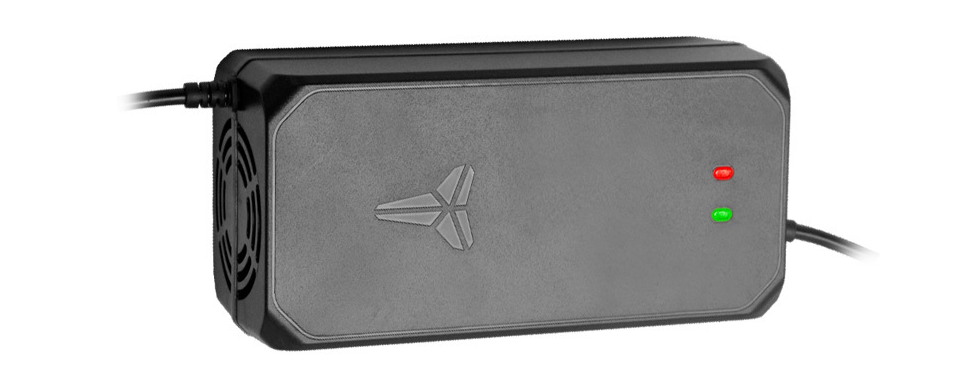
Operating a production area of over 10,000 square meters and supported by a workforce of more than 100 skilled professionals, Shenzhen E-Tronde is fully optimized for complex manufacturing. The facility houses advanced Surface-Mount Technology (SMT) lines, automated through-hole assembly lines, and dedicated high-frequency transformer production workshops.
Its R&D team consists of more than 10 senior engineers who design energy-efficient, reliable, and highly durable power equipment.
E-Tronde's products are widely used in consumer electronics, telecommunications, electric vehicles, and heavy-duty industrial equipment. By combining robust domestic distribution systems in China with a growing global export footprint across Europe, Southeast Asia, and South America, E-Tronde demonstrates a clear commitment to scaling its presence in the international market.
The manufacturing ecosystem in Shenzhen offers distinct advantages for advanced power supply development. By grouping raw component suppliers, PCB fabricators, automated assembly plants, and certified testing facilities in close proximity, E-Tronde maintains highly responsive production loops. This geographic clustering translates to three main advantages for international buyers:
From local copper winding sources for high-frequency switch-mode transformers to custom polycarbonate housing formulations, every stage of production is vertically integrated. This level of control minimizes lead times, isolates production from global logistics shocks, and ensures stable material costs.
Modern factories utilize Automated Optical Inspection (AOI) systems, X-ray laminography for solder verification, and computerized load-bank burn-in chambers. These tools ensure that every power adapter meets the necessary criteria for line regulation, load regulation, and ripple voltage control before shipment.
With an engineering team on site, custom plug matrices, dynamic current-limit programming, and custom co-branding are highly accessible. Changes to PCB layouts or plastic tooling can be designed, prototyped, and compliance-tested in weeks, rather than months.
Modern travel adapters must perform reliably across a wide range of environments. Below are some key scenarios where these devices are utilized:
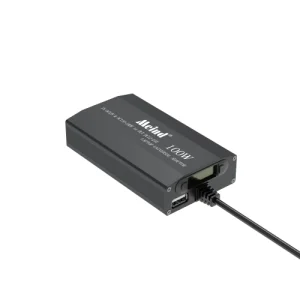
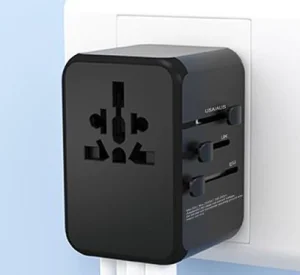
Frequent business travelers require compact adapters capable of supplying sustained 100W+ USB-C Power Delivery. These devices allow professionals to charge laptops, tablets, and phones simultaneously from a single outlet, minimizing footprint and weight.
Hotels, co-working spaces, and airports install modular travel adapters behind panels or inside furniture. This setup ensures that global visitors can connect their devices without needing external plug converters, enhancing customer satisfaction.
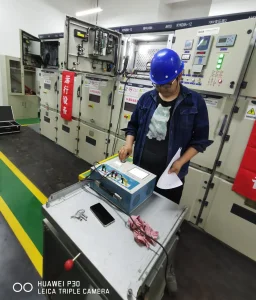
For technical teams conducting diagnostic tests or installations globally, robust power conversion is critical. Heavy-duty adapters with overcurrent, overvoltage, and surge protection prevent damage to sensitive calibration instruments in unpredictable electrical environments.
The power supply industry is rapidly evolving to meet efficiency and safety demands. The following trends represent the major engineering directions for the next generation of portable travel power adapters:
For products sold in the European Economic Area (EEA), the CE Mark is a mandatory safety requirement, not an optional quality badge. This mark indicates that the product complies with all relevant European Directives, including:
1. Low Voltage Directive (LVD) 2014/35/EU: Ensures electrical equipment within specified voltage limits provides high-level protection against electrical shocks, thermal hazards, and mechanical instability.
2. Electromagnetic Compatibility (EMC) Directive 2014/30/EU: Ensures the adapter does not emit excessive electromagnetic interference that could disrupt other electronic systems, and that it has sufficient immunity to external electromagnetic disturbances.
3. RoHS Directive 2011/65/EU: Restricts the use of hazardous substances (such as lead, mercury, and cadmium) in electrical and electronic equipment, promoting environmental safety.
Operational Security: Purchasing CE, CB, and PSE certified adapters from established manufacturers protects distributors from potential customs holds, product recalls, and liability issues.
Technical and regulatory insights for procurement managers and B2B buyers.
Heavy-duty power adapters, battery chargers, and specialized energy tools built for industrial performance.
 E-Tronde Charger