High-performance energy management systems engineered for modern industrial, logistics, and marine infrastructure environments.
In an era defined by rapid decarbonization, fleet electrification, and the rise of mobile operations, the demand for high-efficiency vehicle-mounted inverters has surged exponentially. A vehicle-mounted inverter—acting as the vital bridge between a vehicle's native direct current (DC) power source and critical alternating current (AC) equipment—is no longer a simple consumer gadget. It is a highly engineered, mission-critical component used within complex logistics operations, emergency service vehicles, off-grid mobile command centers, construction fleets, and marine recreational crafts.
Historically, vehicle-mounted inverters served basic consumer auxiliary applications. However, the modern industrial transition toward high-capacity lithium iron phosphate (LiFePO4) power cells, multi-kilowatt solar integration, and high-frequency smart conversion topologies has transformed the industry. As organizations integrate highly sensitive computing machinery, high-draw diagnostic tooling, and industrial-grade heating/cooling devices within mobile units, the performance requirements for inverters have evolved. Systems now demand pure sine wave output, minimal total harmonic distortion (THD), digital communications compatibility (such as CAN-bus, Modbus, or RS485), and sophisticated thermal structures.
For international procurers, sourcing vehicle-mounted inverters from specialized Chinese manufacturers offers a strategic competitive advantage. Under the leadership of advanced technology hubs like Shenzhen, Chinese electronics production has transitioned from simple manual assembly to highly automated, smart manufacturing facilities.
This transformation is driven by several key manufacturing parameters:
By leveraging highly localized supply chains, a Shenzhen-based OEM/ODM partner can prototype, validate, and manufacture high-efficiency inverters in a fraction of the time required by traditional domestic factories, ensuring a faster time-to-market.
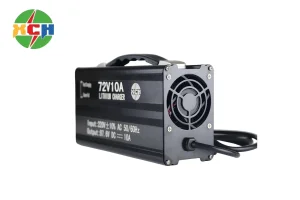
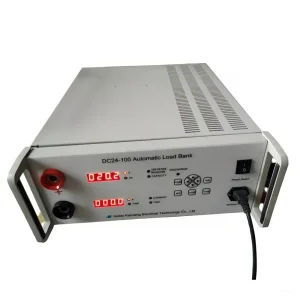
Established in 2001, Shenzhen E-Tronde Charger Co., Ltd. specializes in the development, production, and sales of advanced battery chargers and power supply products. With over two decades of technical expertise, the company has emerged as a leading innovator in the power electronics industry.
The company boasts a workforce of over 100 professionals, with a production area covering more than 10,000 square meters. Shenzhen E-Tronde Charger is equipped with state-of-the-art manufacturing facilities, including dedicated SMT (Surface-Mount Technology) and through-hole assembly lines, fully automated transformer production workshops, and cutting-edge automated charger and power supply production areas. Supported by a highly skilled team of more than 10 experienced engineers, E-Tronde ensures high-quality product development and robust engineering solutions.
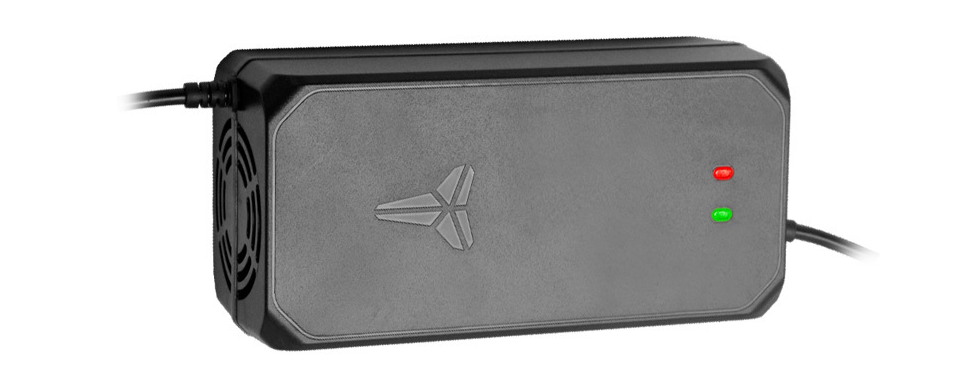
Modern high-power vehicle inverters are categorized by their circuit configuration and wave generation. Pure Sine Wave inverters generate AC output with extremely low harmonic levels, matching or exceeding grid utility quality. This is crucial for inductive loads such as air compressors, water pumps, mobile refrigerators, and precision diagnostic devices.
In contrast, modified sine wave inverters pose compatibility issues with complex circuitry, causing elevated temperatures, increased power draw, and noise. To combat this, Shenzhen E-Tronde focuses on high-frequency switching technology, utilizing premium MOSFETs and Insulated Gate Bipolar Transistors (IGBTs) to build highly compact, pure sine wave power electronics.
Utilizing Gallium Nitride (GaN) and Silicon Carbide (SiC) semiconductors to significantly reduce switching losses, achieve thermal efficiency, and minimize space requirements.
Integrated protections against over-voltage, low-voltage shutdown, thermal overload, output short-circuits, and reverse polarity to ensure maximum vehicle safety.
Built-in communication interfaces (CAN-bus, RS485) allowing integration with standard automotive ECUs and digital control panels for telemetry and control.
Industrial inverters require customized parameters based on where and how they are deployed. The environment dictates the cooling mechanisms, dust proofing, vibration tolerances, and interface protocols:
Ambulances house vital life-support equipment, patient monitoring displays, and mechanical ventilators. A power failure or transient voltage spike can jeopardize patient safety. Modern emergency vehicles utilize vehicle-mounted inverters with ultra-fast transfer times (under 10ms) and comprehensive active isolation. They switch between grid-shore power and internal vehicle alternator power seamlessly.
Service fleets for telecommunications, utility grids, and municipal maintenance require mobile workstations equipped with high-power tooling, soldering stations, and battery-charging docks. By installing highly efficient, heavy-duty vehicle-mounted inverters, service personnel can run heavy machinery directly from the vehicle engine alternator, eliminating the noise, emissions, and space required by external gasoline generators.
Salt air, water droplets, and high vibration present harsh operational environments. Marine-grade vehicle-mounted inverters feature conformal-coated PCBs, rust-resistant housing, and high IP protection (e.g., IP65 or above). This ensures critical navigation systems, water heaters, and diagnostic systems operate continuously without galvanic corrosion or short-circuit failures.
B2B buyers, supply-chain executives, and design engineers must navigate complex safety regulations when integrating vehicle-mounted inverters. Top-tier manufacturers like Shenzhen E-Tronde focus heavily on quality and safety compliance. We design systems to pass the industry's most rigorous global testing standards:
Furthermore, our advanced R&D engineering team collaborates closely with global partners to provide custom enclosures, output configurations, and dedicated software protocols, bridging the gap between standard off-the-shelf inverters and highly integrated automotive OEM solutions.
Having successfully established a comprehensive domestic sales network across China, with provincial agents and regional distributors, Shenzhen E-Tronde Charger Co., Ltd. is now expanding its footprint in international markets. The company has begun penetrating key overseas markets, including Southeast Asia, Europe, and South America. With a focus on building long-term partnerships and delivering exceptional customer service, Shenzhen E-Tronde aims to enhance its global presence.
Our expansion strategy relies on continuous technological innovation. As vehicle electrical architectures transition from 12V/24V systems to 48V, 72V, and even 400V/800V EV architectures, our research team is designing new high-voltage DC-to-AC conversion topologies. This ensures compatibility with advanced electric drivetrains, hybrid battery systems, and hydrogen fuel-cell vehicle networks.
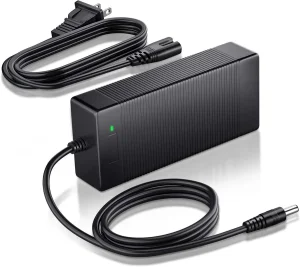
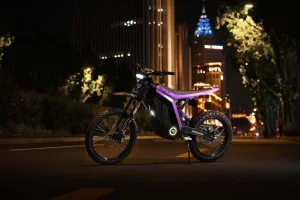
Optimized charging stations and travel adapters designed for international grids, micro-mobility, and high-power applications.
 E-Tronde Charger