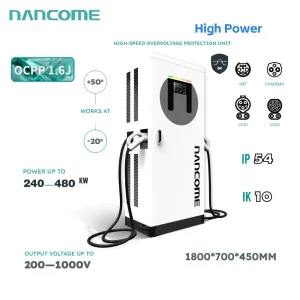
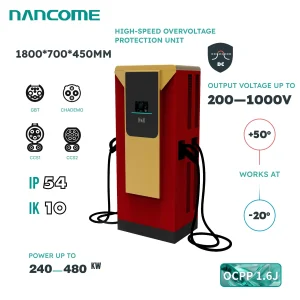
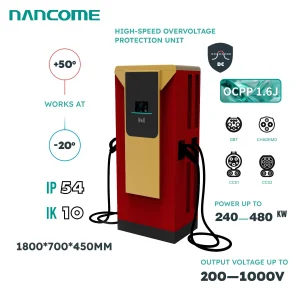
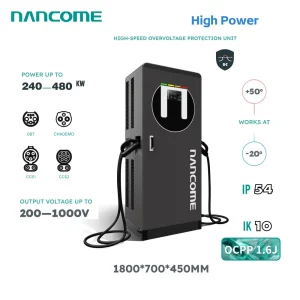
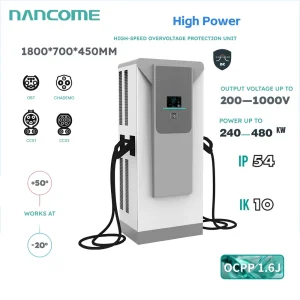
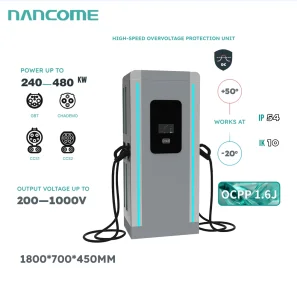
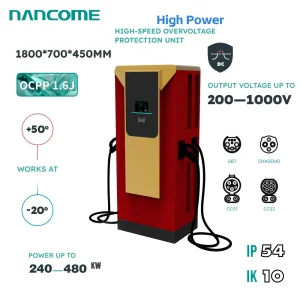
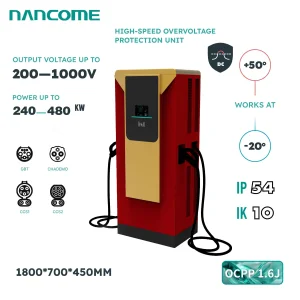
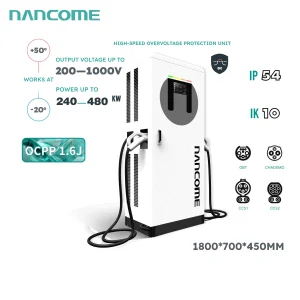
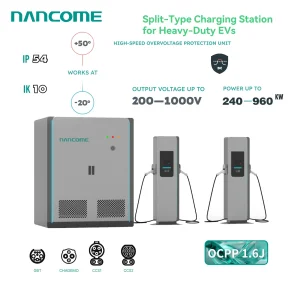
Premium high-power chargers selected for municipal transit, utility vehicle infrastructure, and private industrial fleets operating in the mountain terrains of Lesotho.
As the global energy shift accelerates, the Kingdom of Lesotho is facing an unprecedented industrial transition. Situated at high altitudes exceeding 1,400 meters, Lesotho’s commercial logistics, municipal transit networks, and high-value diamond mining projects (such as those in the Maloti Mountains) demand heavy-duty, highly resilient infrastructure. Shifting from imported diesel to clean electric fleets is not just an environmental imperative; it is an economic strategy to secure energy independence and reduce operational expenditures.
Implementing Industrial High-Power Charging Stations in Lesotho presents distinct geographic and atmospheric challenges. Decreased air density at high elevations affects thermal dissipation and electrical clearance gaps. Consequently, off-the-shelf commercial chargers frequently fail prematurely under these harsh conditions. Our custom-engineered power solutions address these microclimatic factors, ensuring long-term reliability and compliance with Southern African power grids.
An engineering breakdown of how we design charging systems to operate reliably under extreme atmospheric and grid conditions in Lesotho.
At altitudes above 2,000m, standard air insulation becomes less effective. We design our chargers with widened electrical clearances, enhanced creepage distances, and derated semiconductor profiles to prevent arcing and thermal breakdown.
To support areas with limited grid access, our 240kW to 480kW chargers integrate with solar photovoltaics and battery storage systems (BESS). This minimizes peak demand fees and ensures reliable charging off-grid.
Our stations support open protocol communications. Fleet managers can remotely monitor status, perform diagnostics, limit power delivery during high-tariff periods, and control access from centralized operations centers.
| Feature / Parameter | Standard Commercial Charger | E-Tronde Industrial-Grade Charger (Lesotho Spec) |
|---|---|---|
| Operating Altitude | Up to 1,000 meters | Fully rated up to 3,000 meters (Altitude-de-rated design built-in) |
| Cooling Topology | Standard axial fans (highly vulnerable to dust and moisture) | Liquid cooling / Partitioned air-duct isolation (IP55/IP65 cabinet) |
| Grid Voltage Flexibility | Narrow range (typically 400V ±10%) | Wide input range (380V/400V/415V ±15% to accommodate rural fluctuations) |
| Lightning Protection | Class II SPD (standard protection) | Heavy-duty Class I+II surge protection (critical for mountain storms) |
| Harmonic Distortion (THD) | < 8% at rated output | < 5% at rated output (protects delicate local distribution transformers) |
Company Overview: Established in 2001, Shenzhen E-Tronde Charger Co., Ltd. specializes in the development, production, and sales of advanced battery chargers and power supply products. With over two decades of expertise, the company has emerged as a leading innovator in the power electronics industry.
Scale and Facilities: The company boasts a workforce of over 100 professionals, with a production area covering more than 10,000 square meters. Shenzhen E-Tronde Charger is equipped with state-of-the-art manufacturing facilities, including dedicated SMT (Surface-Mount Technology) and through-hole assembly lines, fully automated transformer production workshops, and cutting-edge automated charger and power supply production areas. In addition, the company is supported by a skilled team of more than 10 experienced engineers, ensuring high-quality product development and robust engineering solutions.
Brands and Products: Shenzhen E-Tronde Charger is well-known for producing a wide range of chargers, power adapters, and related power management solutions, serving industries such as consumer electronics, telecommunications, and automotive.
Technology and Innovation: The company is committed to technological innovation and maintaining high standards of quality. With in-house R&D capabilities and a focus on product testing, Shenzhen E-Tronde Charger continuously develops cutting-edge solutions to meet the ever-evolving demands of global markets. As a result, its products are known for superior performance, durability, and energy efficiency.
Market and Expansion: Having successfully established a comprehensive domestic sales network across China, with provincial agents and regional distributors, Shenzhen E-Tronde Charger Co., Ltd. is now expanding its footprint in international markets. The company has begun penetrating key overseas markets, including Southeast Asia, Europe, and South America. With a focus on building long-term partnerships and delivering exceptional customer service, Shenzhen E-Tronde aims to enhance its global presence.
Corporate Philosophy: At Shenzhen E-Tronde Charger, customer satisfaction is at the heart of the company’s values. With a focus on sustainable growth, product excellence, and continuous innovation, E-Tronde strives to be a leader in the global charger and power supply industry, providing reliable, high-performance solutions to meet today’s dynamic needs.
For procurement officers and project engineers managing industrial-scale infrastructure installations.
Industrial procurement in Southern Africa requires strict adherence to international standards and regional electrical guidelines. High-power DC fast-charging systems must comply with SANS (South African National Standards) and NRS regulations, which govern connection policies for the Lesotho Electricity Company (LEC) and ESKOM grids. Our hardware supports standard CCS Type 2 connectors (IEC 62196-3) to ensure complete compatibility with European-spec commercial vehicles and heavy machinery commonly imported into Lesotho.
Operational reliability in remote regions like Mokhotlong or Quthing demands that charging units feature advanced thermal management, solid-state fault protection, and remote diagnostics. By selecting E-Tronde as your primary equipment provider, you secure direct engineering access, comprehensive modular component support, and robust warranties. This minimizes down-time and lowers total cost of ownership (TCO) across your entire vehicle fleet.
High-capacity AC and DC charging stations designed for long-term deployment in commercial depots, logistics hubs, and open-cast mining sites throughout Lesotho.
Connecting ultra-high-power electrical equipment to local distribution grids requires careful engineering. To prevent voltage sags, phase imbalances, and harmonic distortion, our DC fast chargers are built with advanced Active Power Factor Correction (APFC) circuits. This keeps the input power factor above 0.99, reducing reactive losses and preserving grid stability.
Additionally, we integrate intelligent dynamic load balancing. In multi-dispenser configurations, the station automatically allocates energy based on real-time vehicle feedback and battery state-of-charge (SoC). This allows fleet operators to maximize throughput without exceeding their contracted grid capacity or triggering peak-demand surcharges.
Industrial transportation is transitioning rapidly from heavy DC charging to Megawatt-scale Systems (MCS). Our research and development team is leading this change, designing modular topologies that can upgrade from 360kW/480kW to megawatt-plus outputs as vehicle technology evolves.
By using Silicon Carbide (SiC) power semiconductors, our newest stations achieve conversion efficiencies over 96%. This minimizes heat loss—a critical factor at high elevations—and supports bidirectional power transfer (V2G/V2X). As Lesotho develops its smart grid, these stations can feed power back to the grid during peak load hours, turning your fleet into a revenue-generating energy storage asset.
Answers to common technical, grid integration, and logistics questions from operators in Lesotho and Southern Africa.
Get in touch with our application engineers today. We provide full support, from initial site layout and grid assessment to final commissioning and OCPP platform integration.
Contact Our Engineering Team E-Tronde Charger