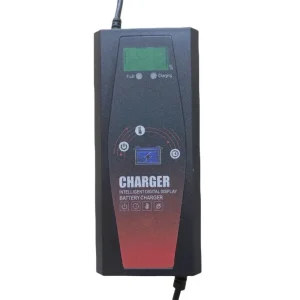
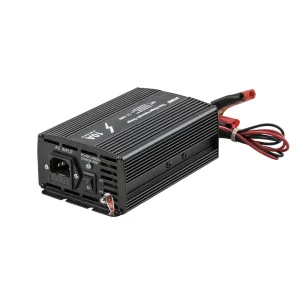
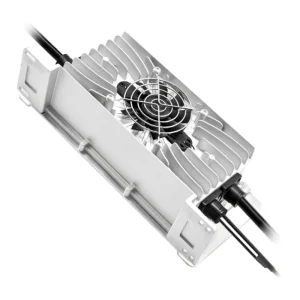
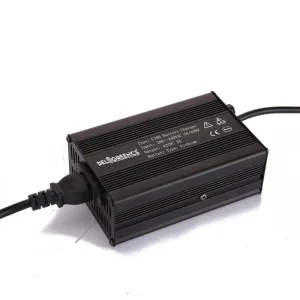
Designed with advanced thermal protection and voltage regulation to support critical telecommunication, automotive, and emergency power systems in tropical climates.
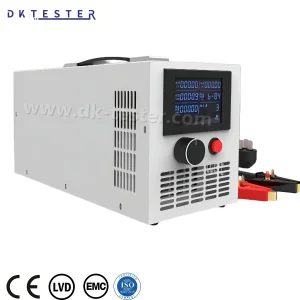
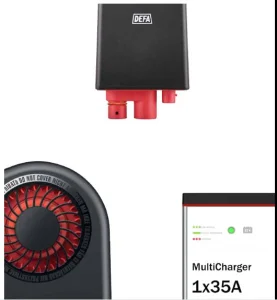
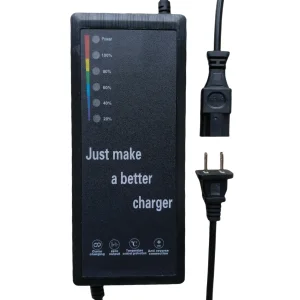
Unlocking industrial efficiency and battery longevity in challenging equatorial climates.
Equatorial Guinea, located near the equator, experiences high relative humidity (often exceeding 85%) and constant ambient temperatures averaging 26°C to 30°C. For industrial battery storage facilities in Malabo (Bioko Island) and the mainland port of Bata, these conditions pose severe operational challenges. Heat accelerates chemical reactions inside lead-acid batteries, leading to self-discharge, grid corrosion, and water loss. When combined with unregulated, basic chargers, the risk of thermal runaway increases significantly.
Deploying universal battery chargers equipped with microprocessor-controlled temperature compensation is crucial. By dynamically adjusting the charge voltage according to environmental ambient temperatures, these smart systems prevent overcharging at high temperatures and undercharging in cooler rain periods, extending industrial battery life spans by up to 50%.
The telecommunications grid managed by GETESA, Muni, and other regional operators relies on heavy-duty AGM and Gel lead-acid battery banks to maintain continuous up-time. Remote cellular towers in Rio Muni, Mongomo, and Evinayong are often powered by solar hybrid installations or diesel generators. If the backup battery banks are improperly charged, network failures occur, disrupting logistics, public safety, and financial transactions.
Our intelligent universal chargers act as the protective shield between unstable, fluctuating input voltages and critical DC battery networks, ensuring that even under severe voltage drops (common in municipal grids), output charging currents remain highly stable.
Supports AGM, GEL, Flooded Lead-Acid, and Lithium-Ion battery management with a simple manual or automated toggle, optimizing inventory for large distributors.
Equipped with heavy-duty surge and lightning arrestors to handle erratic voltage swings and grid anomalies common in remote African utility networks.
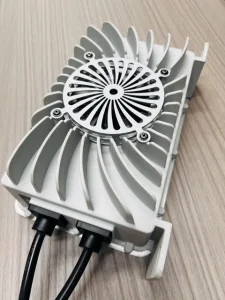
High-frequency Switch-Mode Power Supply (SMPS) design achieves over 90% conversion efficiency, reducing heat generation inside enclosed industrial cabinets.
Reliable performance under harsh environmental exposure, including salt spray, mud, and dust.
Leveraging China's premier power electronics cluster to deliver high-reliability systems globally.
Established in 2001, Shenzhen E-Tronde Charger Co., Ltd. has dedicated more than two decades to engineering, manufacturing, and exporting state-of-the-art battery charging equipment and switched-mode power supplies. With over 100 dedicated technical and assembly professionals and an expansive, modern production plant measuring more than 10,000 square meters, the company remains a pioneer in structural innovation for global grid systems.
Our manufacturing complex houses high-speed surface-mount technology (SMT) lines, automated through-hole component soldering, an intelligent, fully automated high-frequency transformer production workshop, and automated testing bays. Led by a highly skilled team of over 10 veteran power electronics engineers, E-Tronde delivers tailored custom charging curves, digital monitor configurations, and rugged packaging options to global distributors.
For procurement officers in Equatorial Guinea, working directly with Shenzhen E-Tronde guarantees factory-direct pricing, optimized bulk shipping logistics to Bata Port or Malabo Port, and custom branding options.
Bridging power challenges across diverse Equatorial Guinea business sectors.
Offshore production units in the Zafiro, Alen, or Aseng oil fields demand zero downtime. Spark-free, high-IP level chargers supply constant current to generator starter batteries, ensuring emergency power starts instantly during primary turbine maintenance.
Bata's commercial port operates major forklift fleets and electric cargo moving systems. Our industrial high-amperage traction battery chargers minimize battery recharge turnaround windows while protecting delicate cells from internal overheating.
Hospitals, banks, and administrative headquarters in Ciudad de la Paz require robust UPS battery banks. Multi-phase automated smart chargers maintain these backup configurations in standby status safely without water boiling or grid damage.
| Feature Parameter | E-Tronde Intelligent Universal Chargers | Standard Market Analog Chargers |
|---|---|---|
| Charge Curve Control | Multi-stage (Bulk, Absorption, Float, Equalization) MCU controlled | Single stage (Fixed voltage/current) |
| Thermal Compensation | Automatic sensor adjustment (Essential for tropical climates) | None (Causes water evaporation and thermal runaway) |
| Wide Input AC Voltage | 90V - 264V continuous range operation | Fixed 220V ± 10% (Highly vulnerable to local grid sags) |
| Short Circuit Protection | Active electronic output cutoff with auto-recovery | Simple thermal fuse replacement required |
| Multi-Chemistry Options | Selectable profiles (Lead-Acid, AGM, GEL, LiFePO4) | Strictly single battery chemistry only |
Ensuring compliance, reliability, and smooth supply chain execution for industrial buyers.
International sourcing requires rigorous adherence to technical standards. At Shenzhen E-Tronde Charger Co., Ltd., our production systems conform to ISO 9001:2015 quality guidelines. Every exported universal battery charger undergoes comprehensive automatic testing, high-temperature environmental burn-in simulation, and safety verification. Our products carry international certificates, including CE, FCC, RoHS, and LVD, clearing administrative customs processes quickly in Central African CEMAC customs zones.
We provide full technical documentation package supports: electrical circuit diagrams, localized product manuals in Spanish, Portuguese, and French, and certification copies for smooth import declarations in Malabo or Bata ports.
Shipping to West/Central Africa requires heavy-duty transit packaging. Our industrial battery chargers are double-boxed in high-density moisture-resistant corrugated cartons, wrapped in waterproof thermal shrink film, and structured on wooden pallets to prevent cargo movement during ocean transit from Shenzhen port. We work with leading ocean freight alliances to offer both FCL (Full Container Load) and LCL (Less than Container Load) shipping options directly to the main maritime corridors of Equatorial Guinea.
Our export services team monitors tracking milestones, providing updates from our warehouse floor directly to your local logistics agent at the receiving dock.
Explore our full catalog of high-efficiency models optimized for industrial, maritime, and automotive power networks.
Deep industry insights to help procurement managers optimize battery networks.
Lead-acid batteries function through chemical reactions that are highly temperature-sensitive. High ambient temperatures (typical in Malabo and Bata, fluctuating between 25°C and 35°C) reduce the internal resistance of the battery. If a charger maintains a standard voltage of 14.4V at 35°C without adjustment, the battery will overcharge, leading to grid corrosion, rapid loss of water, and eventual swelling or thermal runaway. An intelligent charger dynamically lowers the float and absorption voltage thresholds as the temperature rises, protecting structural cell integrity.
Our intelligent universal chargers employ an advanced switching-mode power supply (SMPS) topology with an active wide input voltage range (90V to 264V AC). Traditional transformer chargers output a linear voltage corresponding to the input; hence, a voltage drop from the utility grid translates to insufficient charging power, causing battery sulfation. Our digital controllers adjust the internal PWM (Pulse Width Modulation) circuit dynamically, maintaining flat, regulated DC output current even during major utility sags.
Yes, provided it is an E-Tronde intelligent universal model. Universal chargers feature select switch profiles with optimized algorithms for Lead-Acid (AGM/Gel/Flooded) and Lithium (LiFePO4/NMC). Lead-acid chemistry requires a gradual multi-stage process ending in a float charge. Lithium, however, requires a constant current / constant voltage (CC/CV) profile with a hard cut-off to prevent degradation. Using a fixed lead-acid profile on a lithium battery can damage its BMS, while using a lithium profile on a lead-acid battery results in permanent undercharging. Our chargers avoid these issues via specialized, selectable firmware profiles.
Our logistics team handles export custom processes in Shenzhen Port. Standard ocean shipping transit to West/Central African ports (including Malabo Port, Bata Port, and Luba Freeport) generally ranges from 35 to 45 days. We provide all necessary international shipping documentation, including clean bills of lading, detailed packing lists, commercial invoices, and CE/RoHS compliance records to ensure straightforward customs processing at local receiving ports.
Every universal charger unit undergoes a structured quality validation sequence at our 10,000 square meter Shenzhen facility. This includes automated ICT circuit component checks, high-voltage insulation tests, performance validation at maximum capacity load limits, and a simulated high-temperature environmental burn-in process. These quality control steps ensure every charger operates reliably under high-humidity conditions upon arrival.
Whether you are establishing a distribution network in Bata, installing industrial backup systems in Malabo, or sourcing for telecommunication arrays, Shenzhen E-Tronde delivers reliable, certified charging systems.
 E-Tronde Charger