Explore our high-performance product lineup designed for diverse global requirements
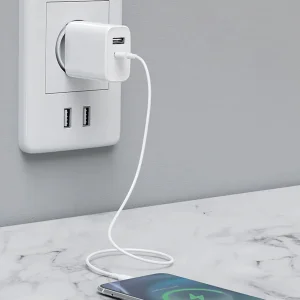
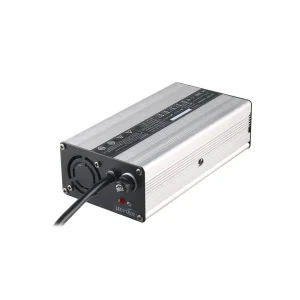
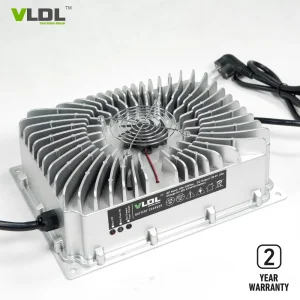
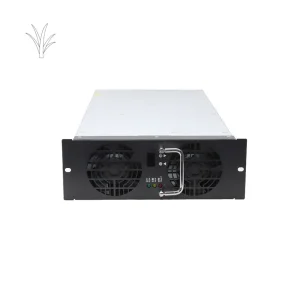
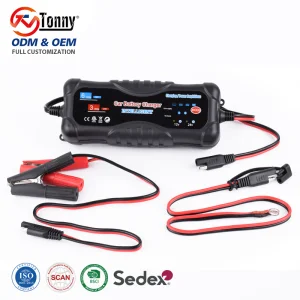
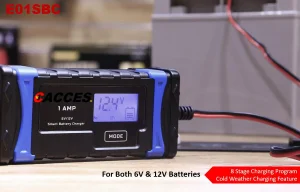
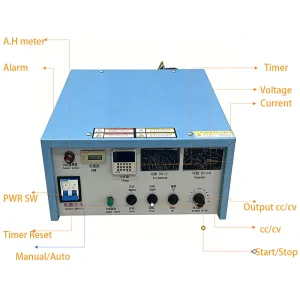
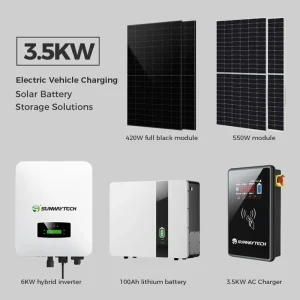
In modern energy management systems, battery degradation remains a key technical challenge. Over time, chemical crystallization on battery plates—known as lead-acid sulfation—restricts performance, reduces capacity, and leads to premature battery failure. Smart Pulse Repair Chargers represent a major development in power electronics, designed to reverse this crystallization process.
Information Gain Insight: Unlike basic constant-voltage chargers, smart pulse repair units use high-frequency, low-voltage pulse modulation. These pulses target the resonant frequency of lead sulfate crystals, breaking them down back into active materials. This process restores electrolyte density without overheating or overpressurizing the battery cells.
During standard discharge cycles, soft lead sulfate crystals form on the battery electrodes. If not fully recharged promptly, these crystals harden into stable, non-conductive structures, blocking current flow. Pulse repair chargers apply a controlled series of rapid voltage spikes. This high-frequency pulse system acts as a mechanical agitator at the molecular level, breaking down crystal structures to clear the plate surface.
This repair system is combined with a multi-stage charging process, typically featuring 7 or 8 distinct phases:
China's power electronics manufacturing sector provides a strong supply chain network, combining advanced assembly technologies with high component density. Industrial regions like Shenzhen lead in the production of high-frequency power units, offering several key advantages for global buyers:
Shenzhen's supply chain ecosystem links raw electronic component sourcing, automated PCB assembly (SMT), magnetic component production, and testing laboratories. This structural proximity shortens manufacturing times and reduces logistics costs.
Exporters must meet strict international regulatory standards. Leading factories utilize automated testing equipment, thermal testing cabinets, and computerized aging systems to ensure compliance with standards like CE, UL, RoHS, and FCC.
With experienced engineering teams, China factories provide custom services for charging curves, casing designs, screen layouts, and localized power cords, meeting the specific marketing and technical needs of global B2B buyers.
Company Overview:
Shenzhen E-Tronde Charger Co., Ltd., established in 2001, specializes in the development, production, and sales of advanced battery chargers and power supply products. With over two decades of expertise, the company has emerged as a leading innovator in the power electronics industry.
Scale and Facilities:
The company boasts a workforce of over 100 professionals, with a production area covering more than 10,000 square meters. Shenzhen E-Tronde Charger is equipped with state-of-the-art manufacturing facilities, including dedicated SMT (Surface-Mount Technology) and through-hole assembly lines, fully automated transformer production workshops, and cutting-edge automated charger and power supply production areas. In addition, the company is supported by a skilled team of more than 10 experienced engineers, ensuring high-quality product development and robust engineering solutions.
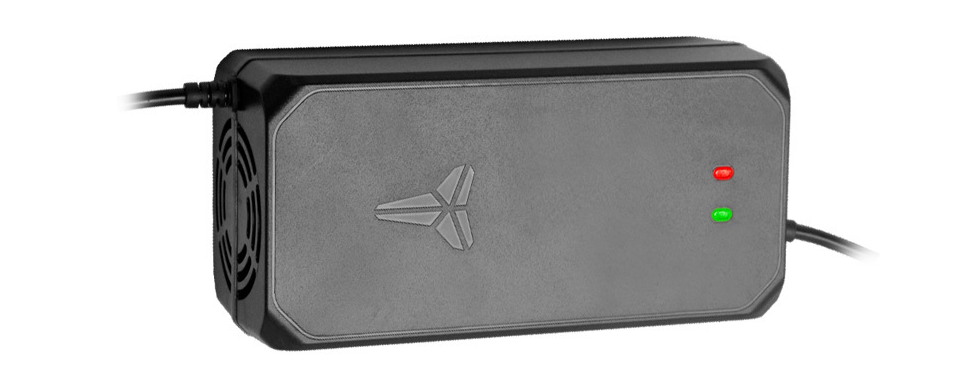
Brands and Products:
Shenzhen E-Tronde Charger is well-known for producing a wide range of chargers, power adapters, and related power management solutions, serving industries such as consumer electronics, telecommunications, and automotive.
Technology and Innovation:
The company is committed to technological innovation and maintaining high standards of quality. With in-house R&D capabilities and a focus on product testing, Shenzhen E-Tronde Charger continuously develops cutting-edge solutions to meet the ever-evolving demands of global markets. As a result, its products are known for superior performance, durability, and energy efficiency.
Market Expansion & Corporate Philosophy:
Having successfully established a comprehensive domestic sales network across China, with provincial agents and regional distributors, Shenzhen E-Tronde Charger Co., Ltd. is now expanding its footprint in international markets. The company has begun penetrating key overseas markets, including Southeast Asia, Europe, and South America.
At Shenzhen E-Tronde Charger, customer satisfaction is at the heart of the company's values. With a focus on sustainable growth, product excellence, and continuous innovation, E-Tronde strives to be a leader in the global charger and power supply industry, providing reliable, high-performance solutions to meet the needs of today's dynamic world.
Power supply systems operate in varied and demanding environments. Smart pulse repair technology can be adapted to several specialized applications:
In logistics fleets, cold-chain trucks, and public transit, batteries undergo deep discharge cycles and varying temperatures. Smart pulse charging restores starting power and extends battery service life, helping to reduce maintenance costs.
Marine environments expose batteries to humidity and salt spray, which can accelerate self-discharge and lead to sulfation. Waterproof smart marine chargers manage and repair starting and deep-cycle batteries, helping ensure system reliability at sea.
Off-grid residential and telecommunication solar power systems rely on battery storage arrays. Implementing intelligent maintenance pulse charging prevents degradation in storage systems that undergo constant cyclic charging.
For procurement managers and wholesale distributors sourcing from China, validating technical capabilities is an essential part of the process. Key areas of evaluation include:
Expert insights on smart pulse repair chargers and procurement logistics
A smart pulse repair charger uses a Microcontroller Unit (MCU) to output variable frequency pulse signals. While standard chargers provide a direct electrical current that can lead to heat generation and plate crystallization, pulse chargers generate controlled high-frequency voltage cycles. These cycles work to break down lead sulfate crystallization on the battery plates, restoring active materials and extending the overall life of the battery.
Yes, but the charger must feature a dedicated lithium charging profile. Lithium-iron phosphate (LiFePO4) batteries do not experience chemical sulfation and do not require desulfation pulses. However, they do need precise voltage monitoring and cell balancing. A multi-stage smart charger adjusts its program based on the selected battery chemistry to prevent overvoltage conditions.
The repair duration depends on the battery's capacity and its level of crystallization. For passenger car batteries (e.g., 60Ah to 100Ah), a typical repair and reconditioning cycle takes between 8 and 24 hours. The charger monitors the rate of voltage change to determine when the plates have recovered before returning to float or maintenance mode.
Importers should confirm that the products hold recognized international safety certifications. Key standards include CE for Europe, FCC for North America, and UL62368-1 for electrical safety. These certifications ensure the product design incorporates essential protections against short circuits, overcurrent, overvoltage, reverse polarity, and thermal runaway.
No. Pulse repair technology is designed to reverse chemical sulfation on functioning batteries. It cannot repair batteries with structural damage, such as shorted cells, broken internal plates, bent grids, or dried-out gel chambers. If a battery has sustained physical damage, it must be recycled and replaced.
China factories like Shenzhen E-Tronde Charger Co., Ltd. offer various OEM/ODM customization services. These include custom casing designs, branded labels, tailored charging algorithms for specific battery chemistries, localized AC power cord styles, and custom packaging boxes. Large-volume buyers can also request customized firmware and LCD user interface designs.
Battery chemistry is sensitive to temperature changes. In cold weather, batteries require higher charging voltages to absorb energy, while hot conditions require lower voltages to avoid boiling the electrolyte. Chargers equipped with temperature sensors automatically adjust the charging voltage based on ambient conditions, helping to prevent undercharging in winter and overcharging in summer.
For standard designs with neutral packaging, the MOQ can be as low as 100 to 500 units. For customized requirements, such as custom logo printing, customized casings, or unique product packaging, the industry standard MOQ usually ranges from 1,000 to 2,000 units. This volume helps cover setup costs for silkscreen printing, packaging design, and certification testing.
Explore our industrial chargers, EV chargers, and smart power modules
 E-Tronde Charger