Explore our leading industrial power supplies, certified LiFePO4 battery charging modules, and smart EV charging nodes optimized for global grid operations.
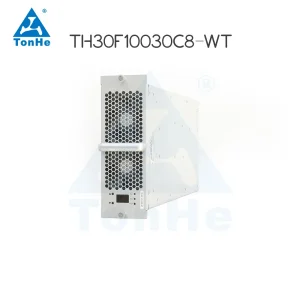
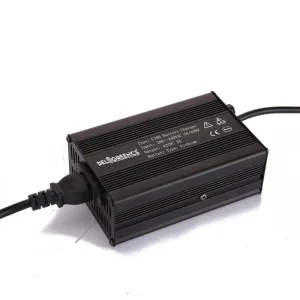
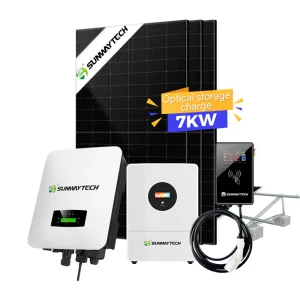
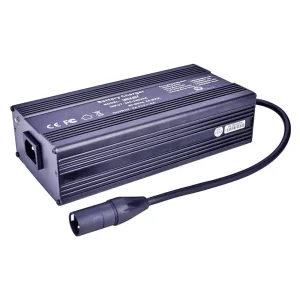
A Twenty-Year Legacy in Advanced Power Management & Semiconductor Power Conversion Engineering
Established in 2001, Shenzhen E-Tronde Charger Co., Ltd. has dedicated over two decades to the design, custom development, precision manufacturing, and global exportation of advanced battery chargers, multi-topology power adapters, and dynamic smart power management units (PMUs). The enterprise stands as an innovative pillar in power electronics, merging high-frequency resonant conversion technologies with robust micro-controller based protection matrices.
Operating a manufacturing ecosystem spanning more than 10,000 square meters, Shenzhen E-Tronde employs a dedicated workforce of over 100 industry professionals. Our facility features advanced surface-mount technology (SMT) lines, high-speed automated radial insertion systems, and a fully automated transformer fabrication workshop. By maintaining in-house control over transformer cores and windings, we ensure consistent performance and high reliability across all batch runs.
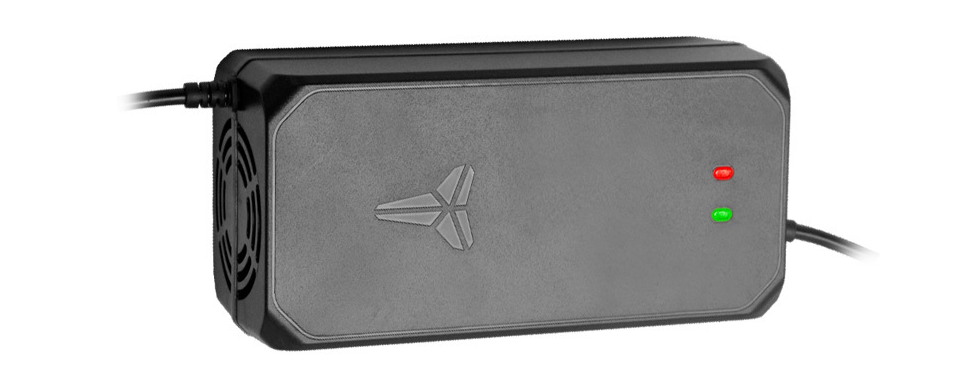
"Our engineering core relies on continuous automated testing and comprehensive compliance verification. Every unit shipped from Shenzhen E-Tronde is subjected to full-load burn-in testing, automatic optical inspections (AOI), and multi-point functional safety checks before export."
Shenzhen E-Tronde Charger is renowned for its diverse portfolio of consumer power adapters, high-efficiency lithium/lead-acid battery chargers, and residential EV wallbox modules. With established regional distribution agents across mainland China, the enterprise has significantly expanded its global supply chain. Currently, our products support energy-storage networks, industrial mobility, consumer communications, and solar systems in North America, Europe, Southeast Asia, and South America.
Analysis of dynamic market demands, wide bandgap transitions, and modern power density benchmarks.
The rise of lightweight utility vehicles—including electric golf carts, standard delivery trikes, and AGVs—requires chargers capable of handling varied outdoor conditions and complex lithium-ion or lead-acid curves.
Integrating localized solar PV infrastructure with vehicle charging stations requires chargers to adapt dynamically to shifting input voltages while maintaining low standby loss and high electromagnetic compatibility.
Modern charging units require advanced safety protections—including reverse polarity guardrails, active thermal throttling, short-circuit containment, and over-current protection—to protect expensive battery systems.
Globally, industrial markets are shifting away from heavy, inefficient linear topologies toward intelligent, high-density switching converters. By integrating active power factor correction (PFC) circuitry and synchronous rectification, contemporary power supply units regularly achieve overall efficiencies exceeding 92%. This efficiency reduces operating temperatures, prolongs component life, and aligns with environmental regulations like the EU's ErP Directive and Energy Star standards in North America.
Charting the transition from traditional silicon systems to high-frequency GaN/SiC platforms.
As power adapter designs demand higher power densities, traditional silicon-based switches face limitations. Our technical roadmap focuses on the transition to wide-bandgap (WBG) semiconductors, which support higher switching frequencies and improve thermal efficiency.
| Technology Layer | Current Framework (Silicon-Based) | Next-Gen Framework (GaN / SiC Platform) | Key Performance Impact |
|---|---|---|---|
| Semiconductor Switching | Standard Super-junction MOSFETs (65-100 kHz) | Gallium Nitride (GaN) & Silicon Carbide (200-500 kHz) | Reduces switching losses by up to 60%, allowing for more compact chassis designs. |
| Thermal Dissipation | Large aluminum extruded heatsinks & passive airflow | High-thermal-conductivity potting compound & smart dynamic fans | Maintains lower internal junction temperatures under sustained high-load conditions. |
| Charging Algorithms | Fixed Profile Constant Current / Constant Voltage (CC/CV) | Dynamic profile adjusting via SMBus, CAN, or Modbus protocols | Extends battery pack life cycles by adapting to real-time cell parameters. |
| Power Conversion | Hard-switched flyback & standard half-bridge topologies | Resonant LLC converter with synchronous rectification (SR) | Achieves peak conversion efficiency up to 96% and reduces standby power. |
This technological progression enables high-power, waterproof battery chargers (like our IP54/IP66 models) to maintain stable operations in challenging marine and agricultural environments, eliminating the need for bulky casing or external active ventilation.
Tailored power delivery designs for municipal transit, outdoor exploration, and residential solar storage grids.
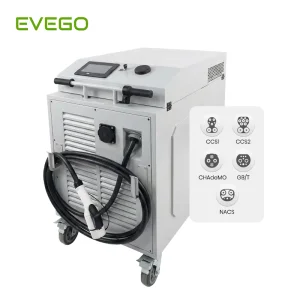
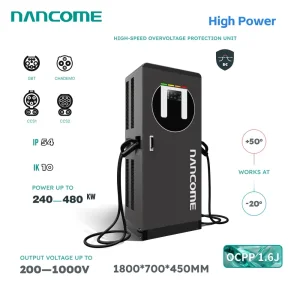
High-voltage depot environments require reliable power supplies. Units like our 480kW charging stations use modular power stacks to route energy to electric bus fleets. Incorporating active cooling and isolated high-power modules helps prevent grid disturbances and keeps uptime high during three-phase charging operations.
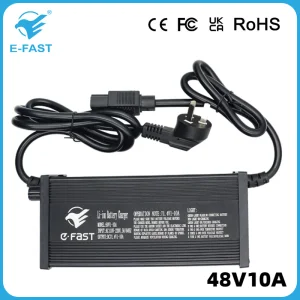
Moisture, dust, and corrosive salts can damage sensitive internal electronics. Our waterproof series (such as the 360W SAA/UL certified IP54-IP56 chargers) features fully potted aluminum alloy cases. This design isolates PCBs from moisture, making them suitable for marine runabouts, electric utility ATVs, and chemical spraying machinery.
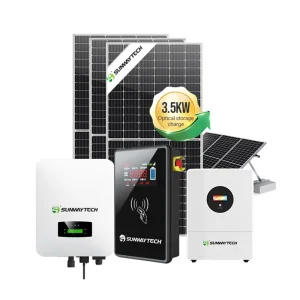
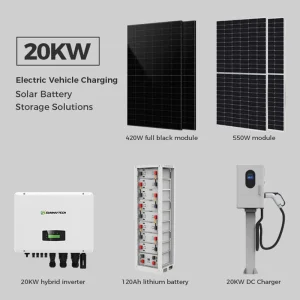
In locations without reliable main power, power adapters must interface with hybrid solar arrays, battery backups, and Level 2 home EV wallboxes. Our hybrid charging platforms manage dynamic load balancing. They prioritize solar input when available, falling back to grid energy during low-light periods to minimize consumption costs.
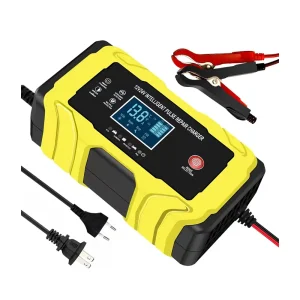
Electric scooters, golf carts, and commuter vehicles require chargers that are highly portable yet robust. Multi-stage pulse chargers with active repair modes monitor battery impedance, helping to reverse sulfation in traditional lead-acid batteries and restore capacity during charge cycles.
How Shenzhen E-Tronde delivers competitive pricing, custom tooling, and high-volume production capacity.
Shenzhen is a global hub for power electronics, providing a complete local supply network for raw materials and components. Our factory leverages this ecosystem to manage costs and response times effectively:
This localized supply network allows Shenzhen E-Tronde to support flexible minimum order quantities (MOQs) and offer customized OEM/ODM options to meet the needs of international clients.
Helping international distributors navigate safety standards and import regulations.
To access global markets, power electronics must comply with regional safety standards. Shenzhen E-Tronde ensures compliance through third-party certifications across different jurisdictions:
| Target Region | Safety Standards Required | Regulatory Marks | Shenzhen E-Tronde Compliance Support |
|---|---|---|---|
| European Union | EN 62368-1, EN 55032/35 (EMC), CE-LVD | CE, RoHS, WEEE | Certified compliant. Test reports and Declarations of Conformity (DoC) available for customs. |
| North America | UL 62368-1, CSA C22.2, FCC Part 15 Class B | cULus Mark, FCC | UL-listed power adapters and battery chargers with low-emission profiles. |
| Oceania | AS/NZS 62368.1, SAA Electrical Safety | SAA, RCM | Equipped with Australian compliant pin configurations and SAA certificate registration. |
| United Kingdom | Electrical Equipment Safety Regulations | UKCA | Fully updated UKCA conformity declarations for smooth importation post-Brexit. |
Beyond certifications, we support distributors with custom packaging, localized user manuals, and regional power cord configurations (EU, US, UK, AU, KC, PSE) to ensure products are retail-ready upon delivery.
Answers to technical, regulatory, and production questions from engineers and procurement teams.
LiFePO4 batteries require a precise Constant Current/Constant Voltage (CC/CV) cycle without a trickle charge phase. Keeping a lithium pack at its maximum voltage can degrade its structure. Lead-acid batteries, in contrast, require a float charge phase (trickle charge) to offset natural self-discharge and prevent sulfation over long periods of inactivity.
Our chargers feature multi-stage electromagnetic interference (EMI) filters, including common-mode choke coils, X/Y suppression capacitors, and shielded metal housings. This design minimizes high-frequency emissions, keeping them within FCC Part 15 and EN 55032 Class B limits to prevent interference with nearby electronics.
Yes, we provide full OEM and ODM services. A typical custom project—including PCB design, housing modification, prototyping, and initial testing—takes 4 to 6 weeks. Certification phases (such as UL or CE updates) depend on testing schedules and requirements.
We offer chargers with ingress protection ratings from IP20 (for indoor ventilated enclosures) to IP54, IP56, and IP67. Potted designs seal the electronic assemblies against water, dust, and vibration, suitable for maritime or mining operations.
Explore our industrial-grade high-current charging bays, solar energy wallboxes, and consumer travel adapters.
 E-Tronde Charger